|
|
Abe, Masao
|
Carey, Arthur Graham
|
Gover, Kevin
|
Lewis, Franklin
|
Perry, Barbara
|
Suzuki, D.T.
|
|
Abhedananda, Swami
|
Casewit, Jane Fatima
|
Govinda, Anagarika
|
Lewisohn, Leonard
|
Perry, Whitall
|
Sworder, Roger
|
|
Abulafia, Abraham
|
Caussade, Jean-Pierre de
|
Grierson, Roderick
|
Lindbom, Tage
|
Petitpierre, Jean-Claude
|
Talamantez, Inés
|
|
Aguéli, Ivan
|
Chelkowski, Peter
|
Gril, Denis
|
Lipsey, Roger
|
Petzen, Barbara
|
Tanaka, Kenneth K.
|
|
Aitken, Robert
|
Chodkiewicz, Michel
|
Habito, Ruben
|
Looking Horse, Arvol
|
Pietsch, Roland
|
Tavener, John
|
|
Akram, Ejaz
|
Chouiref, Tayeb
|
Hani, Jean
|
Lyons, Oren
|
Pirajno, Alberto Denti di
|
Teasdale, Wayne
|
|
Al-‘Alawi, Shaykh Ahmad
|
Collins, Cecil
|
Hanson, Bruce K.
|
Mabud, Shaykh Abdul
|
Raine, Kathleen
|
Tootoosis, Gordon
|
|
al-Qadir al-Jaza’iri, `Abd
|
Colombière, Claude de la
|
Helminski, Kabir
|
Macnab, Angus
|
Ramachandran, Mudumbai
|
Townson, Duncan
|
|
Allah Al-Aliskandari, Ibn ' Ata'
|
Coman, Brian
|
Henry, Gray
|
Mahaprabhu, Chaitanya
|
Rauf, Feisal Abdul
|
Trimble, Charles
|
|
Almqvist, Kurt
|
Cooper, Jean C
|
Herrigel, Gustie
|
Maharshi, Ramana
|
Rossi, Vincent
|
Trosper, James
|
|
Amstutz, Galen
|
Cornell, Vincent
|
Hori, Victor Sogen
|
Manring, Rebecca
|
Roszak, Theodore
|
Tulsidas, Goswami
|
|
Anvar, Iraj
|
Cowan, James
|
Hultkrantz, Âke
|
Manshi, Kiyozawa
|
Ryojin, Soga
|
Ueda, Shizuteru
|
|
Appelbaum, David
|
Critchlow, Keith
|
Huxley, Aldous
|
Mataji, Vandana
|
Sales, Lorenzo
|
Unno, Taitetsu
|
|
Apple Blossom Lonewolf, Rosemary
|
Cross, Stephen
|
Ilahi-Ghomshei, Husayn
|
Matheson, Donald McLeod
|
Samsel, Peter
|
Unno, Tetsuo
|
|
Arlee, John
|
Daiei, Kaneko
|
Isaac of Akko, Rabbi
|
McKenna, Robert
|
Sayers, Dorothy
|
Upton, Charles
|
|
Armstrong, Karen
|
Dakake, David
|
Izutsu, Toshihiko
|
McRae, John R.
|
Schimmel, Annemarie
|
Valiuddin, Mir
|
|
Arviso Deloria, Vivian
|
Dakake, Maria Massi
|
Jenny, Johann Jakob
|
Medicine Crow, Joe
|
Schumacher, E. F.
|
Versluis, Arthur
|
|
Austin, R.W.J.
|
Dalai Lama, HH the
|
Johnston, Edward
|
Merton, Thomas
|
Scott, Timothy
|
Vidal , Beatriz
|
|
Bakar, Osman
|
Dembski, William A.
|
Johnston, William
|
Midgley, Mary
|
Sermonti, Giuseppe
|
Ward, Benedicta
|
|
Banac, Ivo
|
Eaton, Charles le Gai
|
Jones, David
|
Minchinton, Alex
|
Seton-Barber, Dee
|
Ware, Metropolitan Kallistos
|
|
Bando, Shojun
|
Eck, Diana
|
Kabir, (Kabira)
|
Monastra, Giovanni
|
Shastri, Hari Prasad
|
Watson, Ian
|
|
Barr, James
|
El-Ansary, Waleed
|
Kalin, Ibrahim
|
Morris, James W.
|
Sherrard, Philip
|
Waukau-Villagomez, Lauren
|
|
Benson, John Howard
|
Erb, Peter
|
Kapleau, Philip
|
Murata, Sachiko
|
Shichiri, Gojun
|
Weightman, Simon
|
|
Bernardino of Siena, St.
|
Ernst, Carl W.
|
Kelly, Bernard Philip
|
Naeem, Fuad S.
|
Shinran, Gutoku
|
Weil, Simone
|
|
Berry, Wendell
|
Eudes, Jean
|
King of the United Kingdom, HRM Charles III
|
Nair, Shankar
|
Shore, Jeff
|
Weiss-Dutilh, Deborah
|
|
bin Muhammad, HRH Ghazi
|
Fabbri, Renaud
|
Kingsley, Peter
|
Narasimhachary, M.
|
Singam, S. Durai Raja
|
White Hat Sr., Albert
|
|
Black Elk, (Nicholas)
|
Faivre, Antoine
|
Kraft, Kenneth
|
Negus, Michael Robert
|
Smith, Huston
|
Williams, Alan
|
|
Blackhirst, Rodney
|
Finamore, John
|
Kumar, Satish
|
Nishitani, Keiji
|
Smith, Wolfgang
|
Wilson, Raymond
|
|
Borella, Jean
|
Fouhy, Thomas C
|
Lallemant, Louis
|
Omine, Akira
|
Snyder, Gary
|
Winter, T.J.
|
|
Brenner, Louis
|
Frey, Rodney
|
Le Saux, Henri
|
Paramahamsa, Ramakrishna
|
Sokusui, Murakami
|
Xingjian, Gao
|
|
Brown, Elenita and Marina
|
Gandhi, Mahatma
|
Leach, Bernard
|
Paraskevopoulos, John
|
Stambaugh, Joan
|
Yoshifum, Ueda
|
|
Bruchac, Joseph
|
Gawronski, Raymond
|
Lev Gillet, Archimandrite
|
Pazouki, Shahram
|
Stone, Mark
|
Zaleski, Philip
|
|
Cardew, Michael
|
Gill, Eric
|
Lewis, C.S.
|
Pease, Janine
|
Strand, Clark
|
Ziarani, Alireza K.
|
|
Cardinal, Tantoo
| | | | | |
Each of these individuals has contributed an essay or interview to a project in World Wisdom’s Library of Perennial Philosophy.
Our Authors' page contains summaries of individuals who are the primary authors/editors/directors of our projects;
readers may also go directly to individual authors' biographies:
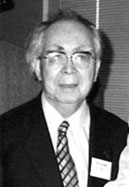 |
Masao Abe (1915-2006) was a disciple of both Hisamatsu Shin’ichi and Nishitani Keiji, and maintained a close contact with D. T. Suzuki during the last ten years of Suzuki’s life.
His essay “God, Emptiness, and the True Self” The Buddha Eye.
Click here for more information
|
|
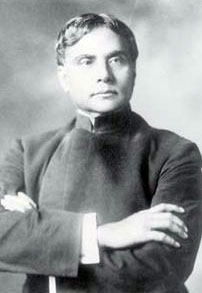 |
Swāmī Abhedānanda (1866-1939) was a direct disciple of Shrī Rāmakrishna. In 1897 he traveled to America to become the head of the Vedanta Society in New York. He stayed in America until 1921 teaching and lecturing. In addition to his work on The Gospel of Rāmakrishna, he was the author of several books on Indian philosophy and religion.
Click here for more information
|
|
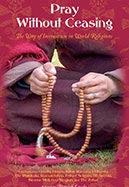 |
Abraham ben Samuel Abulafia was a Sicilian Kabbalist born in Saragossa, Spain in 1240. He is considered one of the most important, but also most complex, figures in Jewish mysticism. In his thirties, he immersed himself in the Sefer Yetzirah (Book of Creation) and began to teach a kind of Kabbalistic “Yoga” based upon the ontological value of Hebrew letters, numbers, and vowel points, as well as rigorous and moral ascesis or a practice of severe self-discipline or ascetism for spiritual reasons. He died sometime after 1291. Abraham ben Samuel Abulafia contributions can be found in the World Wisdom book,
Pray Without Ceasing .
Click here for more information
|
|
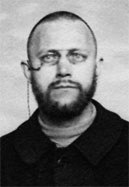 |
Ivan Aguéli ('Abd al-Hadi Aqhili) (1869-1917) was a Swedish painter and author. He was the initiator of René Guénon into Sufism and an early Western expositor of the metaphysics of Ibn Arabi. Aside fom his reputation as a creative post-Impressionist painter and as a somewhat eccentric traveler in the tradition of the Malamatiyyah, he is credited with identifying similarities between Sufi and Swedenborgian metaphysics. Aguéli's article "Universality in Islam", appears in the World Wisdom book Universal Dimensions of Islam.
Click here for more information
|
|
 |
Robert Aitken is one of the most widely respected Western teachers of Zen Buddhism. He first encountered Zen during World War II as a internee in a Japanese camp for enemy civilians in Kobe. Whilst in the camp he met and was much influenced by R.H. Blyth. Robert Aitken and his wife, Anne, founded the Diamond Sangha in Hawaii in 1959. Aitken-Roshi is the author of many articles and nine books, including Taking the Path of Zen (1985) and Original Dwelling Place: Zen Buddhist Essays (1996).
His contributions can be found in The Betrayal of Tradition: Essays on the Spiritual Crisis of Modernity
edited by
Harry Oldmeadow .
Click here for more information
|
|
|
 |
Shaykh Ahmad Al-‘Alawî (1869-1934) was one of the most influential Sufi masters of recent times, and to this day is highly revered for his sanctity and powerful writings. He was born and lived his whole life in Mostaghanem, Algeria, which also became a major center for those seeking initiation into his path of esoteric Islam. The Shaykh Al-‘Alawi was also a humble cobbler, from which he earned a living for himself and his family. Even so, he was reported as having around one hundred thousand disciples during his lifetime. His emphasis on the way of the invocation is beautifully expressed in his statement: “Remembrance is the mightiest rule of the religion.…The law was not enjoined upon us, neither were the rites of worship ordained, but for the sake of establishing the remembrance of God.” Martin Lings' classic book A Sufi Saint of the Twentieth Century is a biography of this great spiritual figure.
Contributions from Shaykh Ahmad Al-‘Alawi can be found in the following World Wisdom books:
Click here for more information
|
|
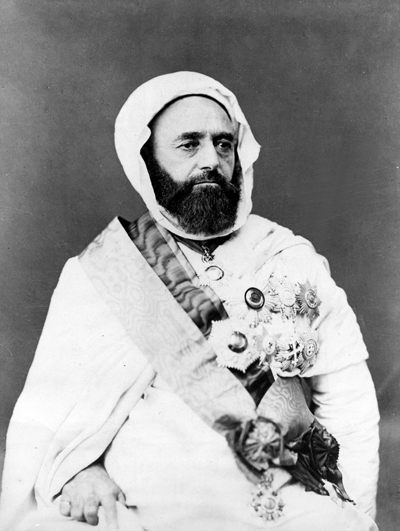 |
`Abd al-Qādir al-Jazā’irī (1808-1893) was an Algerian metaphysician and mystic, as well as a political and military leader who led the Algerian resistance against the French in the mid-nineteenth century. He was a major commentator and continuator of Ibn Arabi. He is considered by the Algerians as national hero, and his remains were brought back from Damascus to Algeria in 1962. Al-Qādir's article "The God Conditioned by Belief" appears in the forthcoming World Wisdom book, Universal Dimensions of Islam.
Click here for more information
|
|
 |
Ibn ‘Atâ’ Allâh Al-Iskandarî (1259-1309) was born in Alexandria. At age seventeen, he converted to tassawuf (Sufism), the mystical dimension of Islam. In 1287, he succeeded his master as head of Shâdhilî order. He devoted his life to teaching, spiritual direction, and writing. His contributions can be found in the World Wisdom book, Pray Without Ceasing
Click here for more information
|
|
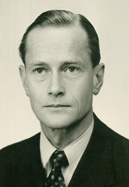 |
Swedish philosopher and author; editor and translator of Tidlös besinning i besinningslös tid: Ur Frithjof Schuons verk, Kurt Almqvist was also a professor and an accomplished poet. He taught Romanic Languages including Spanish, Latin, French, Catalonian and Provencal. In addition to writing many poems in Swedish, he published an anthology of quotations by Frithjof Schuon and René Guénon in Swedish.
His article "Every Branch in Me" is included in World Wisdom's anthology
Every Branch in Me: Essays on the Meaning of Man .
This anthology, whose title is taken from Mr. Almqvist's article, is is featured in World Wisdom's
Perennial Philosophy series.
Click here for more information
|
|
|
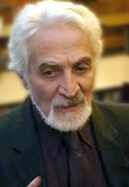 |
Iraj Anvar was born in Tehran, Iran. As a teen he moved to Italy with his family where later on he studied theatre. In the mid ’60s Anvar went back to Iran and, while pursuing a career in the theatre, he also began studying Persian literature and translation. After a career at Tehran Theatre Workshop, which he co-founded, he enrolled in New York University in 1978 to continue his theatrical research. With the advent of the Iranian Revolution, Iraj Anvar transferred to the Department of the Near Eastern Studies, from which he obtained his Ph.D. in 1991. For the past three decades he has been teaching Persian Language and Culture at NYU, Harvard, Columbia and the University of Wisconsin. Dr. Anvar joined Brown University in the fall of 2008, where he has been teaching Persian Language and Culture. Dr. Iraj Anvar contributed the essay “From Rūmī’s Mathnawī to the Popular Stage” (with co-author Peter Chelkowski) to the volume The Philosophy of Ecstasy: Rumi and the Sufi Tradition.
Click here for more information
|
|
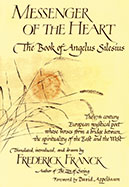 |
David Appelbaum is a Professor of Philosophy at State University of New York at New Paltz and is the author of several books on spiritual philosophy including
Gathering Sparks: Interviews from Parabola Magazine and
The Shock of Love.
A graduate of Harvard, Professor Appelbaum is also a former senior editor of Parabola. Appelbaum wrote the Foreword to
Messenger of the Heart .
Click here for more information
|
|
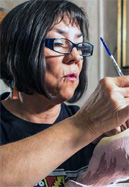 |
Rosemary Apple Blossom Lonewolf is an American Indian artist, lecturer, and teacher, enrolled in the Santa Clara Pueblo (Tewa) tribe, located in northern New Mexico, USA. Ms. Lonewolf contributed the foreword to the Wisdom Tales book Whispers of the Wolf, written and illustrated by Pauline Ts’o.
Click here for more information
|
|
|
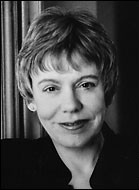 |
Karen Armstrong is the internationally-renowned auther of numerous works including,
Through the Narrow Gate
(1980), an autobiographical account of her seven years as a Roman Catholic nun;
Muhammad: A Biography of the Prophet
(1992);
A History of God
(1993);
Jerusalem: One City, Two Faiths
(1996);
The Battle for God ;
and
Buddha
(2000). She teaches at the Leo Baeck College for the Study of Judaism, and in 1999 she received the Muslim Public Affairs Council Media Award.
Her article
"Faith and Modernity"
can be found in the
The Betrayal of Tradition: Essays on the Spiritual crisis of Modernity
edited by Kenneth (Harry) Oldmeadow.
Click here for more information
|
|
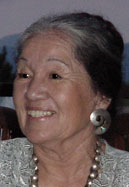 |
Vivian Arviso Deloria is an educator, school administrator, educational consultant, writer, and a specialist in curriculum development. Ms. Arviso, from the Diné people (Navajo), comes from Tohatchi, New Mexico, Fort Defiance Agency. For Wisdom Tales, Vivian Arviso Deloria has contributed the preface to Whispers of the Wolf, written and illustrated by Pauline Ts’o, and the foreword to The Woman Who Lived with Wolves, written and illustrated by Paul Goble.
Click here for more information
|
|
 |
Ralph (R.W.J.) Austin was born in 1938 in Willerby, Humberside, England. He received an Honors degree in Classical Arabic and a Ph.D. in Islamic Mysticism, both from the University of London. From 1963-1988 he taught Arabic and Islamic Studies in the School of Oriental Studies at the University of Durham. During this period he conducted research in Islamic mysticism in general and in the work of the renowned Sufi Muhyi ’d-Dīn Ibn ‘Arabī (1165-1240) in particular. His works include a translation of Ibn Arabī’s Rūh al-Quds (“The Spirit of Holiness”) and extracts from Ad-Durrat al-Fākhira (“The Precious Jewel”) under the title of Sufis of Andalusia, two treatises in which Ibn ‘Arabī describes his meetings with the numerous Sufi masters whom he knew in his youth. Austin also translated im-portant extracts from Ibn ‘Arabī’s Fusūs al-Hikam (“The Bezels of Wisdom”) for the Classics of Western Spirituality series.
Click here for more information
|
|
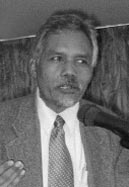 |
Osman Bakar is a scholar, teacher and writer. Dr. Bakar has written a dozen books and more than 100 articles on various aspects of Islamic thought and civilization, both classical and contemporary. He is one of the founding members and has also served as President of the Islamic Academy of Science of Malaysia. Dr. Bakar is currently Visiting Professor and Malaysia Chair of Islam in Southeast Asia at Georgetown University’s Center for Muslim-Christian Understanding. His essay
"The Nature and Extent of Criticism of Evolutionary Theory"
is included in the anthology
Science and the Myth of Progress .
Click here for more information
|
|
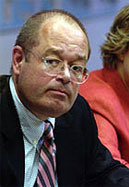 |
Ivo Banac is Emeritus Professor at the Department of History of Yale University (New Haven, Connecticut, USA). He is also Professor of History at Zagreb University's Faculty of Philosophy. He was the President of the Croatian Helsinki Committee on Human Rights. His publications include: The National Question in Yugoslavia: Origins, History, Politics (1984), With Stalin against Tito: Cominformist Splits in Yugoslav Communism (1989), and Acta turcarum (2006). Banac wrote the introduction to the forthcoming World Wisdom title: Maintaining the Sacred Center.
Click here for more information
|
|
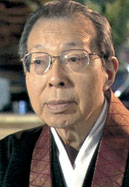 |
Shojun Bando (1932-2004) was a Japanese scholar, author, translator, editor, and a revered Shin Buddhist priest. He was an influential figure, due in large part to his role in disseminating information on Shin Buddhism to the Western world. Rev. Bando taught for many years as Professor of Buddhism at Otani University in Kyoto, Japan. A prolific author on matters of Buddhism, he published many articles and books, including a contribution to the World Wisdom anthology on Shin Buddhism, Living in Amida’s Universal Vow: Essays in Shin Buddhism.
Click here for more information
|
|
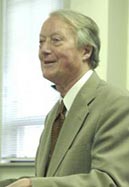 |
James Barr (1924-2006) was an author, seaman, navigator and practicing Buddhist whose article “Of Metaphysics and Polynesian Navigation” is included in Seeing God Everywhere. The article first appeared in Avaloka: A Journal of Traditional Religion and Culture.
Click here for more information
|
|
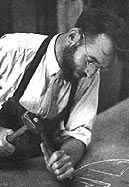 |
John Howard Benson was a noted graphic artist, calligrapher, stonecarver, author, and educator at the Rhode Island School of Design. With Arthur Graham Carey, he was the author of
The Elements of Lettering.
He died in 1956. Benson and Carey's essay,
"The General Problem," is included in the anthology
Every Man an Artist ,
edited by
Brian Keeble .
Click here for more information
|
|
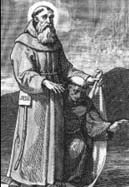 |
St. Bernardino of Siena, the “Apostle of Italy,” was born of noble parents at Massa, Italy, in 1380. He entered the Franciscan order in 1402 and became its vicar-general in 1437. He was the most famous preacher of his time and spoke in all parts of Italy with exceptional charisma. Three times he refused to become a bishop. He died in 1444. Six years later, he was canonized by Pope Nicholas V. Bernardino’s writings are, for the most part, formal treatises upon morality, asceticism, and mysticism. His contributions can be found in the World Wisdom book, Pray without Ceasing .
Click here for more information
|
|
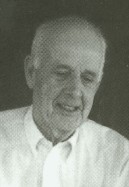 |
Wendell Berry is a conservationist, farmer, essayist, novelist, professor of English, and poet. The New York Times has called Berry the "prophet of rural America." Berry is the author of more than 30 books of essays, poetry and novels. He has worked a farm in Henry County, Kentucky since 1965. He has received numerous awards for his work, including an award from the National Institute and Academy of Arts and letters in 1971, and most recently, the T. S. Eliot Award.
World Wisdom has included essays by Wendell Berry in the following publications:
Click here for more information
|
|
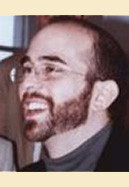 |
Besides his official duties for the Hashemite Kingdom of Jordan, HRH Prince Ghazi bin Muhammad is also an author and a scholar with an interest in religious philosophy. He is presently Professor of Islamic Philosophy at Jordan University.
Prince Ghazi has published several books on religion and traditional culture in both Arabic and English, and numerous articles.
He is the grandson of the late King Talal I of Jordan, and holds a variety of posts as advisor and administrator in the government of the Hashemite Kingdom of Jordan.
Prince Ghazi bin Muhammad’s essay “The Traditional Doctrine of Symbolism” appears in The Underlying Religion.
Click here for more information
|
|
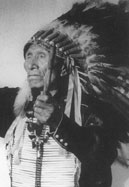 |
Black Elk (Hehaka Sapa) was a renowned Oglala Sioux spiritual leader and medicine man. He was the second cousin of Crazy Horse. Black Elk participated, at about the age of twelve, in the Battle of Little Big Horn of 1876, and was wounded in the massacre that occurred at Wounded Knee in 1890. The remarkable story of this Lakota holy man, a life that straddled the pre-reservation days and the later days of forced assimilation, came to the attention of the world in John Neihardt's Black Elk Speaks, and then in Joseph Epes Brown's The Sacred Pipe: Black Elk's Account of the Seven Rites of the Oglala Sioux.
The new edition of Brown's other classic book, The Spiritual Legacy of the American Indian, contains previously unpublished correspondence from Brown during his time on the reservation, which sheds new light on the debate on whether Black Elk was indeed a sincere Catholic, as well as recording many of Black Elk’s observations on modern ways and traditional Indian spiritual values. Another World Wisdom book, Indian Spirit, contains numerous excerpts of Black Elk's words taken from various sources.
Click here for more information
|
|
|
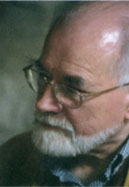 |
Jean Borella taught philosophy at the University of Nancy II in France until 1995. From a Platonist foundation, he became immersed in the thought of Guénon and Eastern metaphysics. His work has been in the field of theology, religious ideas and symbolism. He is the author of several works including Ésotérisme guénonien et mystère Chrétien and La Crise du symbolisme religieux.
Dr. Jean Borella's article "Nakedness and Sacrifice" appears in Not of This World: Treasures of Christian Mysticism, and "The Torn Veil" is in The Essential Sophia.
Click here for more information
|
|
 |
Louis Brenner is Emeritus Professor of the History of Religion in Africa, School of Oriental and African Studies, University of London. He has published extensively on the history of Islam and of Muslim societies in West Africa, with special emphasis on the dynamics and transmission of Muslim thought and ideas, and on Sufism.
Brenner wrote the introduction to the World Wisdom title
A Spirit of Tolerance: The Inspiring Life of Tierno Bokar
by
Amadou Hampâté Bâ.
Dr. Brenner's book
West African Sufi: The Religious Heritage and Spiritual Search of Cerno Bokar Saalif Tall
is an excellent complement to
A Spirit of Tolerance,
providing much context, additional information, and insight on the life and teachings of Tierno Bokar.
Click here for more information
|
|
|
|
 |
Michael Cardew, teacher and founder of numerous pottery organizations, including Vume Pottery, had extensive international experience with the arts and crafts of both Africa and England. In 1976, there was a retrospective exhibition organized by the British Craft Council that traveled to Europe with Mr. Cardew’s work on display. He also wrote Pioneer Pottery, an extremely important pottery manual which is still used today.
Michael Cardew's article, "On Pottery and Potting" is included in the anthology Every Man an Artist , edited by Brian Keeble .
Click here for more information
|
|
 |
Tantoo Cardinal is considered by many as the world's most widely recognized American Indian actress. Raised among the Cree, she turned her political activism into an acting career that has included roles as the knowing wife of the Medicine Man in "Dances With Wolves" (1990), the poignant childless companion of Rip Torn in "Where the Rivers Flow North" (1993) and the mother of Brad Pitt's wife in "Legends of the Fall" (1994).
Cardinal is the narrator of the World Wisdom documentary Native Spirit . Excerpts from an interview with her appear in Living in Two Worlds: The American Indian Experience.
Click here for more information
|
|
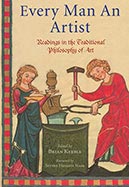 |
Arthur Graham Carey wrote extensively on the perennial understanding of art from a Roman Catholic perspective. Many of his lectures and essays appeared in the Catholic Art Quarterly (later Good Works); others were published as pamphlets. The publisher Sophia Perennis at Universalis of Ghent, NY, is currently preparing a collection of his works for publication. His article, "The General Problem," can be found in Every Man An Artist .
Click here for more information
|
|
|
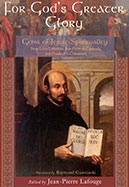 |
Little is known about the life of the Jesuit priest Jean-Pierre de Caussade (1675-1751) beyond the bare facts of his career. He was born in 1675 and entered the Jesuit novitiate in Toulouse at the age of eighteen. Later, he taught classics in the Jesuit college in Aurillac. He was ordained a priest in 1705 and took his final vows in 1708. From 1708 to 1714, he taught in the Jesuit college in Toulouse, and then devoted himself to the itinerant career of a missionary and preacher.
Caussade’s writings occupy the largest part of the World Wisdom anthology For God’s Greater Glory, edited by Jean-Pierre Lafouge. Three sets of texts were chosen: the first one is The Sacrament of the Present Moment; the second is The Fire of Divine Love: Readings from Jean-Pierre de Caussade,; and the third A Treatise on Prayer from the Heart: A Christian Mystical Tradition Recovered for All, which is given almost in its entirety.
An excerpt from The Sacrament of the Present Moment also appears in Pray without Ceasing.
Click here for more information
|
|
 |
Peter Chelkowski studied Oriental Philology at the Jagiellonian University, and Theater Arts at the School of Drama in the city of Cracow. Later, when he moved to England, he attended the School of Oriental and African Studies (SOAS) where he studied Islamic Middle East History and Culture. Later still, he went to Iran and studied Persian Literature with several distinguished professors and scholars at the University of Tehran. These experiences and his education in various countries with diverse languages and cultures contribute to and are reflected in his teaching and writings. Since 1968, he has been Professor of Middle Eastern and Islamic Studies at New York University. Prof. Chelkowski contributed the essay “From Rūmī’s Mathnawī to the Popular Stage,” co-written with Iraj Anvar, to the volume The Philosophy of Ecstasy: Rumi and the Sufi Tradition.
Click here for more information
|
|
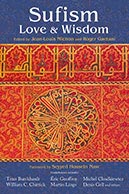 |
Michel Chodkiewicz is the Director of Studies at the École des Hautes Études en Sciences Sociales in Paris. His teaching, research, translations, and writing focus on Sufism, particularly on the important figures of Ibn Arabi and his direct and indirect disciples.
His essay “The Vision of God According to Ibn Arabi” appears in Sufism: Love and Wisdom.
Click here for more information
|
|
 |
Tayeb Chouiref is a French scholar, translator and teacher. He is the author of The Spiritual Teachings of the Prophet (two volumes in French, 2008), an annotated collection of authoritative Prophetic traditions commented by Masters of Islamic spirituality. He is also the translator of several works of al-Ghazâlî. Chourief's article "Shaykh Ahmad al-Alawî and the Universalism of the Quran" appears in The Universal Dimensions of Islam.
Click here for more information
|
|
 |
Cecil Collins, writer, teacher and artist explored many visions in his art. His major essay ‘The Vision of the Fool’ was first published in 1947. Mr. Collins had numerous exhibitions throughout his lifetime, including a major Retrospective Exhibition at the Tate Gallery, London in 1989. Another essay that he wrote, "Why does Art today lack inspiration?", is featured in Every Man An Artist .
Click here for more information
|
|
 |
Claude de la Colombière (1641-1682) was born of noble parentage in France in 1641 and died at Paray-le-Monial, in 1682. He entered the Society of Jesus in 1659. In 1674 he was made superior at the Jesuit house at Paray-le-Monial, where he became the spiritual director of Saint Margaret Mary and was thereafter a zealous apostle of the devotion to the Sacred Heart of Jesus.
Two of his texts appear in the World Wisdom anthology For God’s Greater Glory: the first one is Parts IV and V of The Secret of Peace and Happiness, by Fr Jean Baptiste Saint-Juré and Fr St Claude Colombière, S.J., while the second is a selection of themes taken from The Spiritual Direction of Saint Claude de la Colombière.
Click here for more information
|
|
 |
Brian Coman is a former research biologist who worked for the Department of Natural Resources and Environment in Victoria, Australia. As well as numerous scientific publications, he is the author of Tooth and Nail: The Story of the Rabbit in Australia (1999). He has also published a number of essays, mainly in Quadrant. Dr Coman is currently enrolled as a postgraduate research student at La Trobe University, Bendigo, where his doctoral thesis argues a defense of the Judeo-Christian tradition against the criticisms of contemporary ecological historians.
Dr Coman's article "Never say die ... without a cause" can be found in The Betrayal of Tradition , edited by Kenneth Oldmeadow.
Click here for more information
|
|
 |
Informed by the perspective of the Perennial Philosophy, J. C. Cooper wrote and lectured extensively on the subjects of philosophy, comparative religion, and symbolism. She was the author of a wide range of books on spiritual topics, including Taoism, the Way of the Mystic, Yin and Yang, and Symbolism, the Universal Language, but is perhaps best known for her classic reference work: An Illustrated Encyclopedia of Traditional Symbols.
J. C. Cooper's writing is represented in “The Symbolism of the Taoist Garden” in Light from the East: Eastern Wisdom for the Modern West and “The Yin and the Yang in Nature” in Seeing God Everywhere: Essays on Nature and the Sacred. World Wisdom will publish a collection of her essays, along with beautiful Taoist art, in An Illustrated Introduction to Taoism, in 2010.
Click here for more information
|
|
 |
Vincent Cornell is a summa cum laude graduate of the University of California, Berkeley. He received his Ph.D. in Islamic Studies from the University of California, Los Angeles in 1989. Throughout the next decade, he taught at a number of prominent universities before becoming a Professor of History and Director of the King Fahd Center for Middle East and Islamic Studies at the University of Arkansas. His pre-modern interests cover the entire spectrum of Islamic thought from Sufism to philosophy and Islamic law. Mr. Cornell is the author of the foreword to The Path of Muhammad.
Click here for more information
|
|
 |
James Cowan is an Australian philosopher, novelist, traveler and "cultural adventurer" whose work explores the continuum between past, present and future. He is best-known for a series of works on the culture and spiritual heritage of the Australian Aborigines, including Mysteries of the Dreaming (1989) and Myths of the Dreaming (1994), and for his prize-winning novels which include A Mapmaker's Dream (1996) and A Troubadour's Testament (1998). He recently spent several years in Italy where he completed Francis: A Saint's Way (2001).
His article "Towards a New Dreaming" can be found in The Betrayal of Tradition: Essays on the Spiritual Crisis of Modernity , edited by Harry Oldmeadow.
Click here for more information
|
|
 |
Prof. Keith Critchlow is the cofounder of the journal Temenos, as well as the author of numerous books on sacred geometry, including Order in Space and Time Stands Still. He is Professor Emeritus at The Prince’s School of Traditional Arts in London, and a former professor of Islamic Art at the Royal College of Art. Dr. Critchlow, a leading expert in sacred architecture, also founded Kairos, a society that investigates, studies, and promotes traditional values of art and science.
For World Wisdom, Dr. Crithchlow has written the forewords to:
Click here for more information
|
|
 |
Stephen Cross is on the Academic Board of the Temenos Academy and writes and lectures on aspects of Indian and European thought. In 1976 he produced a widely seen television series, The Traditional World of Islam, working closely with Titus Burckhardt, S.H. Nasr and other perennialists. He is currently completing a study of Schopenhauer's philosphy in relation to Indian thought; earlier books include Elements of Hinduism and (as joint author) Inward Lies the Way: German Thought and the Nature of Mind.
Stephen Cross is the author of the article Coomaraswamy, St. Augustine, and the Perennial Philosophy, which appears in the World Wisdom title Crossing Religious Frontiers.
Click here for more information
|
|
|
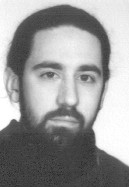 |
David Dakake is an American Muslim author and researcher, currently completing studies at Temple University. He has also studied extensively in Egypt and Iran. He is currently employed as a researcher in Islamic Studies at the George Washington University in Washington, D.C. David Dakake’s very informative essay “The Myth of a Militant Islam” is included in the anthology Islam, Fundamentalism, and the Betrayal of Tradition .
Click here for more information
|
|
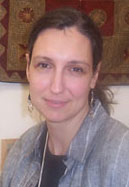 |
Maria Massi Dakake is Assistant Professor of Religious Studies at George Mason University in Fairfax, Virginia, where she teaches courses on various areas of Islam and on women in world religions.
Her essay ‘“Walking upon the Path of God like Men”? Women and the Feminine in the Islamic Mystical Tradition’ appears in Sufism: Love and Wisdom.
Click here for more information
|
|
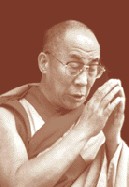 |
His Holiness Tenzin Gyatso, the 14th Dalai Lama of Tibet, is both the spiritual and temporal leader of the Tibetan people. He was born in 1935 in northeastern Tibet, and was acknowledged as the reincarnation of the previous Dalai Lama at age two. Four years later, he began to study Buddhist philosophy and Tibetan culture as well as many other subjects until completing his education at age 23. Following the invasion of Tibet by the communist-inspired Chinese Army in 1959 and the impending threat on his life, he escaped into exile and has since resided in Dharmsala, India, the seat of the Tibetan Government-in-exile. He is a recipient of the Nobel Peace Prize and an author of numerous books and essays, including Kindness, Clarity and Insight (1984), A Human Approach to World Peace (1984), and Ocean of Wisdom (1989).
HH The Dalai Lama has contributed the following pieces to World Wisdom books (click here to read the articles below in our free online Library):
Click here for more information
|
|
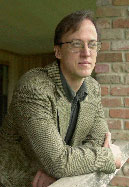 |
William A. Dembski, a mathematician and a philosopher, is associate research professor in the conceptual foundations of science at Baylor University and a senior fellow with Discovery Institute’s Center for the Renewal of Science and Culture in Seattle. His essay “The Act of Creation: Bridging Transcendence and Immanence” is included in Science and the Myth of Progress.
Click here for more information
|
|
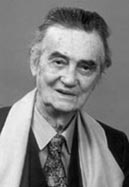 |
Charles le Gai Eaton (1921-2010) was an English writer and teacher who converted to Islam in 1951. He worked abroad in government service and also served as a consultant to the Islamic Cultural Centre in London.
Click here for more information
|
|
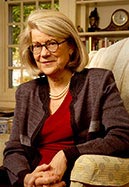 |
Diana Eck is Professor of Comparative Religion and Indian Studies at Harvard University, and has been closely involved in inter-faith dialogue, especially through the World Council of Churches. She is the author of Encountering God: A Spiritual Journey from Bozeman to Banaras and Banaras, City of Light, and is a recipient of the National Humanities Medal.
Click here for more information
|
|
|
|
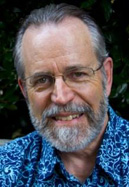 |
Carl W. Ernst is a specialist in Islamic studies, with a focus on West and South Asia. His published research, based on the study of Arabic, Persian, and Urdu, has been mainly devoted to the study of three areas: general and critical issues of Islamic studies, premodern and contemporary Sufism, and Indo-Muslim culture. On the faculty of the Department of Religious Studies at the University of North Carolina at Chapel Hill since 1992, he is now William R. Kenan, Jr., Distinguished Professor of Religious Studies and Co-Director of the Carolina Center for the Study of the Middle East and Muslim Civilizations. Prof. Ernst contributed the essay “Wakened by the Dove’s Trill: Structure and Meaning in the Preface to Rūmī’s Mathnawī, Book IV” to the volume The Philosophy of Ecstasy: Rumi and the Sufi Tradition.
Click here for more information
|
|
 |
St. Jean Eudes (1601-1680) belonged to the “French School,” a movement for the renewal of religious life in the seventeenth century. Ordained in 1625, he founded the Order of Our Lady of Charity of the Refuge in 1641 and the Congregation of Jesus and Mary in 1643. His major contribution to the Church as a whole was his foundation of public devotion to the Sacred Heart. Eudes composed the mass and office of the Sacred Heart in 1668-1669, and a feast of the Sacred Heart was first celebrated by Eudist communities on 1672. He was canonized in 1925. St. Jean Eudes contributions can be found in the World Wisdom book, Pray without Ceasing .
Click here for more information
|
|
 |
Renaud Fabbri is the director of the Perennialist website religioperennis.org. He received an M.A. in Philosophy from La Sorbonne IV (Paris, France) and an M.A. in Comparative Religion from Miami University (Ohio, USA). Born in France, he is currently living in the US. His interests include traditional metaphysics, Hinduism, Sufism, and the Perennialist school.
Renaud Fabbri contributed the essay "The Milk of the Virgin: the Prophet, the Saint and the Sage" to Sacred Web 20, the special 10th anniversary issue of the journal Sacred Web, which was dedicated to Frithjof Schuon on the occasion of his birth centenary.
Click here for more information
|
|
 |
Antoine Faivre is Professor Emeritus of Religious Studies at the École Pratique des Hautes Études and Chair of the History of Esoteric Currents in Modern and Contemporary Europe (Sorbonne). Professor Faivre’s books in English include Access to Western Esotericism, The Golden Fleece and Alchemy, The Eternal Hermes,and Theosophy, Imagination, Tradition; he is editor (with Jacob Needleman) of Modern Esoteric Spirituality.
Prof. Faivre contributed the foreword to The Fullness of God: Frithjof Schuon on Christianity .
Click here for more information
|
|
 |
John F. Finamore is Professor and Chair in the Department of Classics at the University of Iowa. His areas of research interest include Neoplatonic philosophy from Plotinus to Philoponus, Greek and Roman philosophy, and Roman poetry. His most recent publication is Iamblichus’ De Anima: Text, Translation, and Commentary (with J.M. Dillon). Dr. Finamore also serves as President of the U.S. Section of the International Society of Neoplatonic Studies and is Editor for book manuscripts in Neoplatonism for the Brill Press Series.
Prof. Finamore has written the foreword to The Golden Chain .
Click here for more information
|
|
|
 |
Rodney Frey is an educator and writer on world religions, but particularly on North American Indian traditions. Prof. Frey explains that his professional interests center on "the role and the significance of the oral traditions, particularly as those traditions influence a people's relationships with their ‘landscape’ and mediate the impact of Euro-American changes." He is Professor of American Indian Studies and Anthropology at the University of Idaho. Prof. Rodney Frey wrote the foreword for Paul Goble's Tipi: Home of the Nomadic Buffalo Hunters .
Click here for more information
|
|
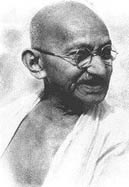 |
Mohandas K. Gandhi was born in India in 1869. He attended law school in London. His early career took him to Southern Africa where he worked unceasingly to improve the rights of immigrant Indians. It was there that he developed his notion of non-violent resistance against injustice, and he was frequently jailed as a result of the protests he led.
His contributions can be found in the World Wisdom book, Pray without Ceasing .
Click here for more information
|
|
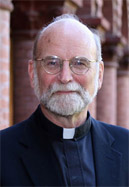 |
Father Raymond Gawronski (1950 - 2016), S.J., was a Jesuit priest for 30 years, but he was also a theologian, an educator, an author, and the spiritual director of seminarians. Father Gawronski contributed a foreword to For God’s Greater Glory: Gems of Jesuit Spirituality, edited by Jean-Pierre LaFouge.
As a theologian, Father Gawronski specialized in dogmatic theology with a focus on eschatology, and on the mystical, particularly as articulated in the work of Hans Urs von Balthasa. He was the author of over thirty articles on various themes, largely touching culture and spirituality, which have appeared in publications such as Communio, New Oxford Review and America, along with the chapter “Redemptor Hominis” in The Thought of John Paul II. Father Gawronski was also the author of the book An Ignatian Retreat (Our Sunday Visitor Press, 2003).
Click here for more information
|
|
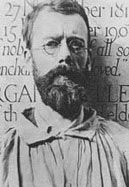 |
Prolific sculptor, writer and letter-cutter, Eric Gill, designed a classic typeface which is still in use today. He was also instrumental in the artistic revival of masonry and stone-cutting in the early years of the twentieth century. Mr. Gill wrote numerous books on art and beauty that continue to inspire present-day letter-cutters.
Mr. Gill's essays, "The Four Causes" and ”Of Beauty”, can be found in Every Man an Artist edited by Brian Keeble .
Click here for more information
|
|
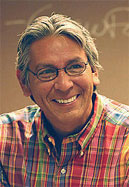 |
Kevin Gover is an author, educator, policy specialist, and an administrator in the public, private, and academic realms. Since 2007, Gover has served as director of the Smithsonian Institution’s National Museum of the American Indian. He has also been Professor of Law at Sandra Day O'Connor College of Law at Arizona State University, Tempe. Prof. Gover previously practiced law with various firms, including one which he founded and which grew into one of the largest Indian-owned firms in the country. In 1997, Professor Gover was selected by President Clinton to serve as Assistant Secretary of the Interior for Indian Affairs. He has been widely praised for his reform efforts and for the apology he crafted on behalf of the Bureau of Indian Affairs to the nation's Indian communities for the history of wrongs done to them. (Those remarks can be read in our online Library.) Since 2007, Professor Gover has served as director of the Smithsonian Institution’s National Museum of the American Indian. Kevin Gover is a member of the Pawnee Tribe of Oklahoma.
Click here for more information
|
|
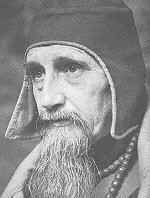 |
Ernst Hoffman was born in Saxony in 1898. He studied architecture and philosophy at Freiburg University where he also developed his interests in painting and archaeology. In 1928 Hoffmann entered the Sangha and moved to the Island Hermitage in Ceylon where he took the name Anagarika Govinda. Several years later he committed himself to the Tibetan tradition and spent thirty years in the sub-continent before moving to the USA. Lama Govinda died in 1985. He was the author of many works on Tibetan Buddhism and of The Way of the White Clouds (1966) an account of his pilgrimage through central and Western Tibet.
Lama Govinda's article "The Fate of Tibet" can be found in The Betrayal of Tradition: Essays on the Spiritual Crisis of Modernity , edited by Kenneth (Harry) Oldmeadow.
Click here for more information
|
|
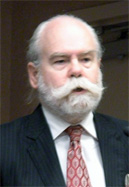 |
Roderick Grierson is a scholar who is Menteşezade Research Fellow and Director of the Rumi Institute at Near East University, Nicosia, Cyprus. He was formerly a fellow of the DuBois Institute for African and African American Research at Harvard University.
Roderick Grierson contributed the essay “‘One Shrine Alone’: Christians, Sufis, and the Vision of Mawlānā,” as well as the piece “In Memoriam: Gökalp Kâmil” to the volume The Philosophy of Ecstasy: Rumi and the Sufi Tradition.
Click here for more information
|
|
 |
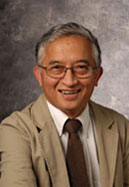
Denis Gril is a scholar, translator, and writer who teaches Arabic and Islamic studies at the Université de Provence in France, where he has been since 1981.
His essay “The Prophetic Model of the Spiritual Master in Islam” appears in Sufism: Love and Wisdom.
Click here for more information
|
|
 |
Ruben Habito is a Professor of World Religions and Spirituality at Perkins School of Theology, Southern Methodist University in Dallas, Texas. He is also Associate Dean for Academic Affairs. Habito completed his doctoral studies at Tokyo University in 1978, and taught at Sophia University in Tokyo. He is the author of numerous books on Buddhism including Experiencing Buddhism: Ways of Wisdom and Compassion, Living Zen, Loving God, Healing Breath: Zen Spirituality for a Wounded Earth, Shinran to no Deai Kara (From My Encounters with Shinran) and many others in Japanese and English. He was President of the Society for Buddhist Christian Studies from 2003 to 2005, and serves as spiritual director and Teacher (Roshi) at Maria Kannon Zen Center in Dallas, Texas.
Prof. Ruben Habito wrote the "Foreword" in The Essential Shinran: The Buddhist Path of True Entrusting , edited by Alfred Bloom.
Click here for more information
|
|
 |
Jean Hani was, most recently, a Professor Emeritus at the University of Amiens in France, where he specialized in Greek literature and philosophy. He wrote several books including Le Symbolisme du temple chrétien, Mythes, rites et symbols: Les Chemins de l'invisible and La Vierge noire et le mystère marial. Jean Hani died in 2012.
Among his numerous books, he also contributed to Ye Shall Know the Truth .
Click here for more information
|
|
 |
Bruce Hanson is a professor of philosophy and religion at Fullerton college. His major area of academic interest has been in the area of mystical experience and comparative religion. He has written several reviews for the Journal of the American Academy of Religion, the biographical entry for Huston Smith in the Dictionary of American Philosophy, and presented several papers on teaching religion. He wrote an enlightening foreword to Survey of Metaphysics and Esoterism .
Click here for more information
|
|
 |
Kabir Helminski is the Co-Director of the Threshold Society (sufism.org), a non-profit educational foundation that has developed programs that provide a structure for practice and study within Sufism and spiritual psychology. Kabir began the study of Sufism with Suleyman Loras of Konya and was officially recognized as a Shaikh of the Mevlevi Order of Sufism in 1990, by the late Celalettin Celebi, Head of the Mevlevi Order. Kabir Helminski contributed the essay “The Contemporary Relevance of Rūmī’s Language of the Soul” to the volume The Philosophy of Ecstasy: Rumi and the Sufi Tradition.
Click here for more information
|
|
 |
Gray Henry lectures and writes on the spirituality of the world's sacred traditions and has published in this field for many years. Founder and trustee of the Islamic Texts Society and former director of Quinta Essentia Publications, she currently directs Fons Vitae Press and is a consulting editor for Parabola. Recently, she produced the video “The Sacred Name and the Heart's Celestial Garden: The Universal Use of the Rosary”.
At the "Paths to the Heart" Conference held at the University of South Carolina, Ms. Henry presented a paper on “Beads of Faith: St Seraphim of Sarov in Sufic Perspective”, which can be found in Paths to the Heart .
Click here for more information
|
|
|
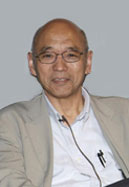 |
Victor Sogen Hori received his doctoral degree in philosophy from Stanford University in 1976 and that same year was ordained a Zen monk in Kyoto. After devoting the next thirteen years to training at monasteries in Japan, he returned to the academic life in 1990. He is currently professor of Japanese religions in the Faculty of Religious Studies, McGill University.
Professor Hori is also the author of several books on Buddhism as well as the foreword to Heinrich Dumoulin’s Zen Buddhism: A History; Japan Volume 2.
Click here for more information
|
|
|
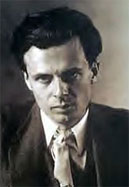 |
Aldous Huxley is well-known as a novelist, essayist and philosopher, the author of such works as Brave New World and The Perennial Philosophy in which he explored common ground shared by the great religious traditions. After moving to the USA in 1947 he was closely involved with The Vedanta Society of Southern California until his death in 1963. He contributed the article "Reflections on Time" which is featured in Light From The East: Modern Western Encounters with Eastern Traditions .
Click here for more information
|
|
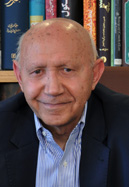 |
Dr. Hossein M. Elahi Ghomshei is a scholar, translator, editor, and writer who has worked extensively in the fields of Persian mysticism, literature and art. He graduated from the Faculty of Theology & Islamic Studies at Tehran University, and pursued Islamic traditional education with his father, Mehdi Elahi Ghomshei, and other contemporary masters of this field. Dr. Ghomshei contributed the essay “The Symphony of Rūmī” to the volume The Philosophy of Ecstasy: Rumi and the Sufi Tradition.
Click here for more information
|
|
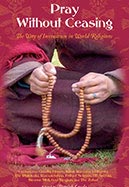 |
Rabbi Isaac of Akko was a Kabbalist of the School of Segovia. He arrived in Spain, via Italy, in 1305 where he met with Rabbi Moses de Leon and learned from him the secrets of the composition of the Zohar. His writings include a Commentary on the Secrets of Rabbi Moses ben Nachman (Nachmanides) and a Commentary on the Sefer Yetzirah (Book of Creation). His contributions can be found in the World Wisdom book,
Pray without Ceasing .
Click here for more information
|
|
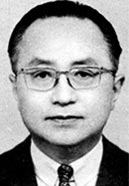 |
Toshihiko Izutsu was Professor Emeritus at Keio University in Japan and an outstanding authority in the metaphysical and philosophical wisdom schools of Islamic Sufism, Hindu Advaita Vedanta, Mahayana Buddhism (particularly Zen), and Philosophical Taoism.
Dr. Izutsu's essay "Creation According to Ibn ‘Arabî" is one of those included in the anthology Seeing God Everywhere: Essays on Nature and the Sacred .
Click here for more information
|
|
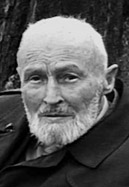 |
Johann Jakob Jenny (1907 – 1997) was one of Frithjof Schuon’s schoolmates in Basle, Switzerland and remained one of Schuon’s closest and lifelong friends. He became a medical doctor and continued to live in Basle for the remainder of his life. Dr. Jenny’s 1993 film interviews in Basle record many recollections from his childhood and youth concerning his close friend, Frithjof Schuon. Excerpts from these interviews appear in Frithjof Schuon: Messenger of the Perennial Philosophy.
Click here for more information
|
|
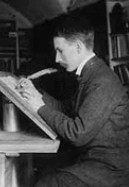 |
Born in Scotland, in 1872, Edward Johnston abandoned his early studies in medicine at Edinburgh University in order to pursue an interest in calligraphy. He was appointed by W. R. Lethaby to teach Lettering and Illumination at the newly formed Central School of Arts and Crafts in London in 1898. Around this time he began his research into letter forms in early manuscripts in the British Museum. He published his Writing & Illuminating, & Lettering in 1906, a legendary manual that has not been out of print since. He almost single-handedly revived the use of the broad-edged pen and both inspired and taught most of the early twentieth-century calligraphers and letter designers at his classes at the Central School and later at the Royal College of Art in London. He designed the famous sans serif alphabet used on the London Underground system. He was awarded the CBE in 1939, and died in 1944.
Johnston's essay "Formal Penmanship Defined by the Thing" is included in Every Man An Artist .
Click here for more information
|
|
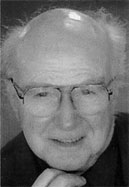 |
William Johnston was born in 1925. A Jesuit priest, Johnston has focused on building contemplative bridges between Buddhism and Christianity in both his pastoral teaching and his writings. His books, including Christian Zen and The Inner Eye of Love, refer to the universal vocation of mysticism. In later life, Professor Johnston was based at Sophia University in Tokyo, where he taught courses on mysticism and meditation. His contributions can be found in the World Wisdom anthology, Pray Without Ceasing . Rev. William Johnston died in 2010.
Click here for more information
|
|
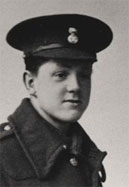 |
Master wood-engraver David Jones, was also a poet and essayist who produced some of the finest wood-engravings ever seen. His poem, In Parenthesis, was praised as one of the greatest English literary works produced after World War I. Mr. Jones also produced a magnificent series of colored inscriptions which were unique in lettering history that are still highly valued today. His article, "Art and Sacrament," can be found in Every Man an Artist .
Click here for more information
|
|
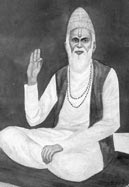 |
Kabīr was an Indian mystic born around 1440. He is widely recognized as a saint among Hindus, Muslims, and Sikhs. According to hagiographic accounts, his mother became pregnant after visiting a Hindu shrine. Upon delivery the child was given up for adoption and Kabîr was raised among a Muslim community of weavers. His spiritual perspective belongs to bhakti, the devotional longing for union with God. This perspective can be found expressed in his fresh, accessible poetry, the greatest of which is collected in the work, Bijak. His contributions can be found in the World Wisdom anthology, Pray Without Ceasing .
Click here for more information
|
|
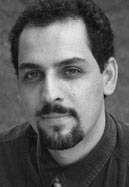 |
Ibrahim Kalin is Assistant Professor of Islamic Studies at the College of the Holy Cross where he teaches courses on Islam, Islamic philosophy and theology, Sufism, Islam and the West, and Islam in the modern world. He is a recipient of the Center for Theology and Natural Sciences (CTNS) Science and Religion Course Program Award, 2002. His publications include articles on Islamic philosophy, Islamic science, and Western perceptions of Islam, and he has translated a number of Islamic philosophical texts from Arabic into English.
Kalin contributed the article "Roots of Misconception: Euro-American Perceptions of Islam Before and After September 11" to the World Wisdom anthology
Islam, Fundamentalism, and the Betrayal of Tradition: Essays by Western Muslim Scholars .
Click here for more information
|
|
|
 |
Bernard Philip Kelly (1907–1958) was an English Catholic author whose thinking has been regarded as neo-scholastic and traditionalist (i.e. in the current of René Guénon). Kelly’s writings were especially concerned with the recalling of contemporary Christian thought to Thomism, and with the provision of a traditional and scholastic critique of the modern
world. He also endeavored to prepare the ground for a sound Christian approach to the Eastern religions and in this regard corresponded regularly with perennialist author Ananda K. Coomaraswamy. Kelly contributed to Religion of the Heart, edited by
S.H. Nasr and
William Stoddart .
Another article by Bernard Philip Kelly, "A Christian Approach to the Non-Christian Religions," appears in
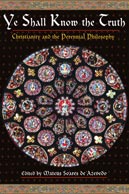
Ye Shall Know the Truth , published by World Wisdom.
Click here for more information
|
|
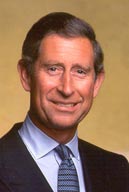 |
HRM Charles III, King of the United Kingdom, is the eldest son of the late Queen Elizabeth II and the late Prince Philip, the Duke of Edinburgh. Besides his central role of supporting The Queen in her various functions, as the Prince of Wales Charles was very active in charitable work, having founded eighteen charities himself. 'The Prince's Charities' are active in many areas, including opportunity and enterprise, education, health, the built environment, responsible business, the natural environment and the arts. In addition, the King worked to promote and protect the UK’s "enduring traditions, virtues and excellence." This includes "highlighting achievements or issues that, without his support might otherwise receive little exposure, supporting Britain’s rural communities, and promoting tolerance and greater understanding between different faiths and communities."
Of particular interest to Perennialists and Traditionalists, The King is actively interested in traditional thought and its applications to the problems of the modern world. He is the Patron of the Temenos Academy, which is dedicated to the central ideas of the Perennial Philosophy. Because of this interest, King Charles III gave the opening address to the Sacred Web conference on “Tradition in the Modern World”, which is featured on Tradition in the Modern World: Sacred Web 2006 Conference - 2 disc DVD set. King Charles III also contributed the “Foreword” to Shakespeare’s Sonnets and the Bible: A Spiritual Interpretation with Christian Sources, by Ira B. Zinman.
Click here for more information
|
|
 |
Peter Kingsley is an internationally renowned expert on the philosophical and mystical roots of the Western tradition, especially in Parmenides and Empedocles. Kingsley works with the sacred tradition that gave birth to the western world. His revolutionary understanding of the history as well as the destiny of western civilization has changed many people on the deepest level — transforming their awareness not only of who they are but also of their purpose in the modern world. He works closely with Native American elders as well as representatives of other spiritual traditions, and is an honorary professor at both Simon Fraser University in British Columbia and the University of New Mexico. He lives with his wife Maria in North Carolina. For further information visit www.peterkingsley.org.
Kingsley contributed the artcile "The Path of the Ancients: A Sacred Tradition Between East and West" to the forthcoming World Wisdom book, Crossing Religious Frontiers.
Click here for more information
|
|
 |
Kenneth Kraft is Professor of Religion Studies at Lehigh University, specializing in Japanese Zen and the new field of engaged Buddhist studies. In 1984–85, he was a postdoctoral fellow at Harvard University’s Reischauer Institute of Japanese Studies. At Lehigh, he has served as Chair of the Religion Studies department and as director of the College Seminar Program. Kraft has also taught at the University of Pennsylvania, Swarthmore College, and the Stanford University Japan Center in Kyoto.
Prof. Kraft has written a new foreword to John C.H. Wu's classic work,
The Golden Age of Zen: Zen Masters of the T'ang Dynasty .
Click here for more information
|
|
 |
Satish Kumar was born in Rajasthan in India in 1936. In 1973 he settled in England, taking on the editorship of Resurgence Magazine, and has been their editor ever since. He is the guiding spirit behind a number of ecological, spiritual and educational ventures in Britain. In 1991, Schumacher College, a residential international centre for the study of ecological and spiritual values, was founded, of which he is the Director of Programmes. He is the author of Path Without Destination (William Morrow, 2000) and You Are Therefore I Am (Green Books, 2002).
Satish Kumar has written the "Introduction" to Seeing God Everywhere: Essays on Nature and the Sacred and The "Foreword" to On the Origin of Beauty: Ecophilosophy in the Light of Traditional Wisdom, by John Griffin.
Click here for more information
|
|
 |
Louis Lallemant (1587-1635) was a French Jesuit who is known today mainly for his Doctrine Spirituelle, a collection of maxims and instructions gathered together by Fr Jean Rigoleuc, one of his disciples, which details very thoroughly his spiritual method. His work is featured in For God’s Greater Glory.
Click here for more information
|
|
 |
Henri Le Saux (Swami Abhishiktananda), 1910-1973, was a French Benedictine monk, author, and a "bridge between Hindu and Christian spirituality." In 1948 he moved to India and assisted in establishing a Christian ashram in southern India. He was later associated with Father Bede Griffiths at Saccidananda Ashram. Abhishiktananda spent the later years of his life as a wandering monk, eventually founding a hermitage on the banks of the Ganges in the Himalayas.
Books containing Le Saux's work include:
Click here for more information
|
|
 |
As the author of one of the most enduring manuals about pottery,
A Potter's Book,
Bernard Leach was a world famous studio potter who also taught and lectured around the world. He had extensive international experience with Japanese, Chinese and English pottery traditions. In 1977, there was a Retrospective Exhibition of Mr. Leach’s work held in the Victoria and Albert Museum in London.
Leach contributed his essay,
"Integration",
for the book
Every Man An Artist .
Click here for more information
|
|
 |
Lev Gillet (pseudonym “a monk of the Eastern Church”) was a monk of both the Western Church’s Benedictine order and of the Eastern Church. Born in 1893, in Isère, France, his early life included service in World War I and university study of philosophy and psychology. Later in life, his work as a priest and scholar would take him across Europe and to the Near East. After entering the Orthodox Church, he was rector of the first French language Orthodox parish in Paris. Lev Gillet was also considered a pioneer of ecumenical and inter-religious dialogue. He died in 1980. His contributions can be found in the World Wisdom anthology,
Pray Without Ceasing .
Click here for more information
|
|
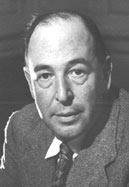 |
C.S. Lewis was born in Belfast, Ireland on November 29, 1898. He was attending Oxford college in 1917 when he joined the British army to fight in World War One. In 1925, he became Fellow of Language and Literature at Oxford. Author of the famous Narnia chronicles, as well as numerous books about Christianity, his writings have been some of the most read books of all time. Lewis became a Professor of Medieval and Renaissance literature at Cambridge University. He died in 1963. Among his works, Lewis contributed to
Ye Shall Know the Truth ,
published by World Wisdom.
Click here for more information
|
|
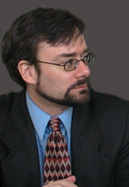 |
Franklin Lewis is Associate Professor of Persian in the Department of Near Eastern Languages and Civilizations and a Deputy Director of the Center for Middle Eastern Studies at the University of Chicago, and past President of the American Institute of Iranian Studies. His research focuses on Persian and Arabic literature and philology, comparative literature and translation theory, Islamic Studies, Sufism, and Baha’i Studies. Prof. Lewis contributed the essay “Towards a Chronology of the Poems in the Dīvān-i Shams: A Prolegomenon for a Periodization of Rumi’s Literary Oeuvre” to the volume The Philosophy of Ecstasy: Rumi and the Sufi Tradition.
Click here for more information
|
|
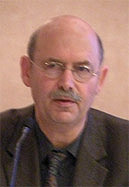 |
Leonard Lewisohn is a scholar and author who specializes in classical Persian and Sufi literature. He is Senior Lecturer in Persian at the Institute of Arab and Islamic Studies, University of Exeter, UK. Dr. Lewisohn is the editor of the upcoming World Wisdom volume (December 2014), The Philosophy of Ecstasy: Rumi and the Sufi Tradition, a groundbreaking collection of 13 essays on Rumi by many of the world’s leading authorities in the fields of Islamic Studies and Persian Literature, in which they explore the major religious themes in Rumi’s poetry and teachings.
Professor Lewisohn has also contributed the essay “‘Ali ibn Abi Talib’s Ethics of Mercy in the Mirror of the Persian Sufi Tradition” to the World Wisdom book The Sacred Foundations of Justice in Islam: The Teachings of ‘Ali ibn Abi Talib .
Click here for more information
|
|
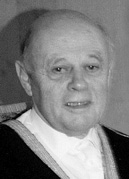 |
Tage Lindbom was born in Sweden in 1909. He was one of the intellectual architects of the Swedish Welfare State, but after World War II, he started to have serious doubts about the cause he promoted. He underwent a slow, but profound intellectual and spiritual change. In 1962 he published The Windmills of Sancho Panza a book that rejected the assumptions behind Social Democracy and related movements. After breaking with his past, Lindbom published many books in Sweden, most of which explore the tension between religion and modern secular ideology. Two of his books have appeared in English. The first was The Tares and the Good Grain (1983) and the second was The Myth of Democracy (1996).
Tage Lindbom's essay “Lucifer” appears in World Wisdom's anthology Every Branch in Me: Essays on the Meaning of Man, and “Virtue and Morality” is included in The Underlying Religion.
Click here for more information
|
|
 |
Roger Lipsey is an art historian, editor and author. Dr. Lipsey has written on a wide range of topics and intellectual figures, but his greatest contributions to the body of perennialist literature are undoubtedly the three volumes he edited of the works of Ananda K. Coomaraswamy (Coomaraswamy, Bollingen series, Princeton University Press, c1977). Lipsey has been called the "leading authority on the life and work of Coomaraswamy" as a result of this monumental task. As an author, his most recent books have been Angelic Mistakes: The Art of Thomas Merton, and Have You Been to Delphi?: Tales of the Ancient Oracle for Modern Minds.
As a leading authority on A. K. Coomaraswamy, Dr. Lipsey has contributed the "Introduction" to Figures of Speech or Figures of Thought? The Traditional View of Art: Revised Edition with Previously Unpublished Author's Notes by Coomaraswamy, edited by William Wroth.
Click here for more information
|
|
 |
Arvol Looking Horse was born on the Cheyenne River Reservation in South Dakota. At the age of 12, he was given the responsibility of becoming the 19th Generation Keeper of the Sacred White Buffalo Calf Pipe, the sacred pipe of the Lakota, Dakota and Nakota Nations. He is widely recognized as a chief and the spiritual leader of all three branches of the Sioux tribe.
Arvol Looking Horse is the author of White Buffalo Teachings and a guest columnist for Indian Country Today. A tireless advocate of maintaining traditional spiritual practices, Chief Looking Horse is the founder of the Big Foot Riders, a group which memorializes the massacre of Big Foot's band at Wounded Knee. He lives on the Cheyenne River Reservation in South Dakota.
Film interviews with Arvol Looking Horse on spirituality, tribal history, and advice for American Indian youth are a featured part of the documentary film and DVD on the Sun Dance entitled Native Spirit: The Sun Dance Way . An illustrated book, Native Spirit: The Sun Dance Way, by Thomas Yellowtail, also features the words of Arvol Looking Horse.
Click here for more information
|
|
 |
Oren R. Lyons is a traditional Faithkeeper of the Turtle Clan, and a member of the Onondoga Nation Council of Chiefs of the Six Nations of the Iroquois Confederacy (the Haudenosaunee). He is Associate Professor in the Department of Native American Studies at the State University of New York in Buffalo. Lyons co-founded and publishesDaybreak, a national American Indian quarterly news magazine. He also edited the book Exiled In The Land Of The Free: Democracy, The Iroquois and The Constitution (1992), and is an accomplished illustrator and painter.
An essay from Oren Lyons, "Our Mother Earth," is included in
Seeing God Everywhere: Essays on Nature and the Sacred .
Click here for more information
|
|
 |
Dr. Shaykh Abdul Mabud is the Director General of the Islamic Academy in Cambridge, England. A graduate of the University of Cambridge, Dr. Mabud also has a Masters degree from the University of Rajshahi, Bangladesh. He is the editor of Muslim Education Quarterly, and has written several books. He is the director of a major research project on curriculum and textbooks at the primary and secondary levels in Bangladesh and has also worked with other Muslim organizations both in England and abroad. Dr. Mabud lives in Cambridge.
Dr. Mabud wrote the foreword to
The Path Of Muhammad: A Book On Islamic Morals And Ethics ,
by
Imam Birgivi
interpreted by
Shaykh Tosun Bayrak .
Click here for more information
|
|
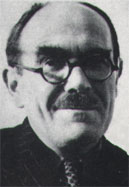 |
Angus Macnab was a gifted translator of Latin and Greek poetry, but as a profession he chose teaching. Mr. Macnab’s interest in Spain began in 1936, and after World War II he learned Spanish and decided to make Spain his home. In 1938, under the influence of G.K Chesterton and Hilaire Belloc, Angus Macnab embraced neo-scholasticism and traditional Catholicism.
Angus Macnab's article, "The Monk and the Caliph," appears in Ye Shall Know the Truth: Christianity and the Perennial Philosophy, and two chapters of his fascinating book Spain under the Crescent Moon are included in Sufism: Love and Wisdom.
Click here for more information
|
|
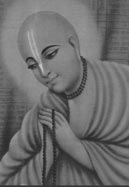 |
Chaitanya Mahaprabhu was born in West Bengal, India in 1486. Although he was also known as a scholar, he is chiefly remembered for having revitalized the bhakti movement (path of love) in India by gathering thousands of devotees together to play musical instruments and chant the names of Krishna. He is also said to have defeated Buddhist scholars by the strength of his arguments. Mahaprabhu died at the age of forty-eight. He left eight verses, known as the Shikshashtaka, which summarize his teachings.
His contributions can be found in the World Wisdom book,
Pray Without Ceasing .
Click here for more information
|
|
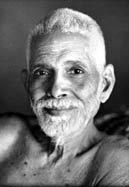 |
Ramana Maharshi was born in 1879 near Madurai in Southern India. In the summer of 1896, upon a sudden outburst of fear of death, he experienced a spiritual awakening that made him realize that he was none other than Atman. Soon thereafter, he left for the sacred mountain of Arunachala, in the vicinity of which he spent ten years living in temples and caves, meditating and pursuing spiritual purification, and maintaining the disciplines of silence and non-attachment. Ramana laid emphasis on the method of inquiry into the nature of the Self, best expressed by the question, “who am I?” He developed cancer and died in April 1950. His life is the subject of
Timeless in Time: Sri Ramana Maharshi.
Sri Ramana Maharshi's article "Advaita and Japa" in
Pray Without Ceasing: The Way Of The Invocation In World Religions .
Click here for more information
|
|
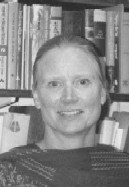 |
Rebecca Manring (Ph.D., University of Washington) is an Assistant Professor of India Studies and Religious Studies at Indiana University in Bloomington. A researcher of religious groups in northeastern India, Dr. Manring 's Reconstructing Tradition: Advaita Acarya and Gaudiya Vaisnavism at the Cusp of the Twentieth Century has been published by Columbia University Press. She has also completed the preservation and cataloguing of the private literary manuscript collection of the late Sukumar Sen (1900-1992), who was an outstanding linguist and Bengali literary scholar. Professor Manring’s next project will focus on sectarian Sanskrit grammars.
Dr. Manring has contributed the foreword to World Wisdom’s
The Essential Swami Ramdas .
Click here for more information
|
|
|
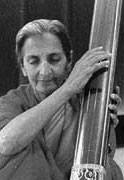 |
Vandana Mataji is a nun who heads the Christian ashram Jiva Dhara, in Rishikesh, at the foothills of the Himalayas. She studied history, politics, and Indian classical music, but her main objective as a teacher in Bombay is to promote an integration of Hinduism into Christian spirituality. She regularly spends six months of the year in the Himalayas for her spiritual exercises and has emphasized the role of japa-yoga as a spiritual bridge between Hinduism and Christianity. Her contributions can be found in the World Wisdom anthology,
Pray Without Ceasing.
Click here for more information
|
|
|
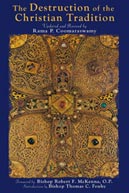 |
Bishop Robert McKenna was initially a Dominican monk who objected to the changes in the beliefs and practice of the Church that were introduced by Vatican II and its aftermath. He was associated with the Orthodox Roman Catholic Movement – a group of 14 priests who shared similar attitudes, from its inception. Due to his refusal to say the new mass or Novus Ordo Missai, he was forced to leave the Dominican monastery. McKenna then established himself in Monroe, Connecticut and was consecrated a Bishop by Gerard de Laurier. McKenna has also ordained several priests who left the Novus Ordo Church and functions as a parish priest in Connecticut.
His foreword can be found in
The Destruction of the Christian Tradition .
Click here for more information
|
|
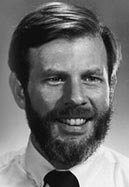 |
John R. McRae is a Professor of East Asian Buddhism and the author of Seeing Through Zen and The Northern School and the Formation of Early Ch'an Buddhism (Studies in East Asian Buddhism, No 3). He has taught at both Indiana and Cornell Universities, and is currently a lecturer at Komazawa University in Tokyo. Professor McRae wrote the introduction for Zen Buddhism: A History; India and China Volume I .
Click here for more information
|
|
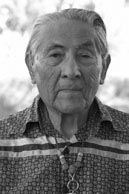 |
Dr. Joe Medicine Crow (1913-2016) was the Crow Tribal Historian and the oldest living man of the Crow tribe. In 1939, he was the first member of the Crow tribe to obtain a master’s degree. Dr. Medicine Crow was a guest speaker at Little Bighorn College, the Custer Battlefield Museum, and several other colleges throughout the nation. Joe Medicine Crow received the Presidential Medal of Freedom, the nation's highest civilian honor, on August 12, 2009. He lived on the Crow Reservation in Lodge Grass, Montana, until his death on April 3, 2016.
His books include, A Handbook of Crow Indian Laws and Treaties, and From the Heart of the Crow Country. Dr. Medicine Crow's contributions to World Wisdom books include:
Click here to watch videos featuring Joe Medicine Crow.
Click here for more information
|
|
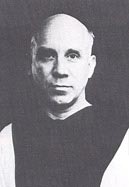 |
Thomas Merton ("Father Louis") was a Trappist monk, but was also known worldwide for his numerous and varied writings in many different genres, including poetry. He influenced many with his spiritual reflections as well as his works of social and political criticism. Many recognized Thomas Merton as one of the earliest and most moving contributors to meaningful inter-religious dialogue. He was both a committed Christian and one who appreciated the riches of other spiritual traditions. It seems that his prominence as contemplative monk and public thinker has only increased since his death.
The writings of Thomas Merton can be found in the following World Wisdom books:
Click here for more information
|
|
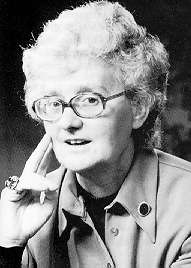 |
Mary Midgley was Professor of Philosophy at Newcastle University and is the author of numerous works exploring the history and philosophy of modern science. Her special interests include the development of moral principles concerned with the welfare of non-human species.
Her article "Putting Nature in Her Place" can be found in the anthology,
The Betrayal of Tradition: Essays on the Spiritual Crisis of Modernity ,
edited by
Harry Oldmeadow
It comes from one her best known works, Science as Salvation (1992). Her most recent work is Science and Poetry.
Click here for more information
|
|
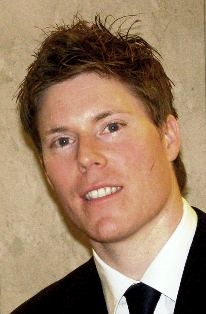 |
Alex Minchinton is an Arts Honours graduate of La Trobe University, Bendigo. He has recently commenced a doctoral thesis titled ‘A Window to the East – An Australian Poet in Japan: Reflections from the Life and Works of Harold Stewart’. His interests include Buddhist traditions, most notably Dzogchen and Shin, as well an abiding interest in religious architecture and garden symbolism. Minchinton's article "The Exiled Immortal" appears in the World Wisdom title, Crossing Religious Frontiers.
Click here for more information
|
|
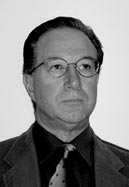 |
Giovanni Monastra is the Managing Director of INRAN which is the National Research Institute for Food and Nutrition in Italy. Prior to this, he did research work in the laboratories of a pharmaceutical company, carrying out scientific studies mainly in the field of immunological drugs. He is the author of many articles and two books, one on the origin of life (Le origini della vita, 2000), with several criticisms of Darwinism, and the second on transgenic food, in which he presents arguments against genetic engineering (Maschera e volto degli OGM, 2002).
Giovanni Monastra is the author of the foreword to
Science and the Myth of Progress ,
edited by
Merhahd Zarandi .
Click here for more information
|
|
 |
Prof. James W. Morris has taught Islamic and religious studies at the Universities of Exeter, Princeton, Oberlin, and the Sorbonne. He lectures and leads workshops in many countries on Islamic philosophy and theology, Sufism, the Islamic humanities, the Qur’an, and Shiite thought. He is currently Professor of Islamic Studies at Boston College. Prof. Morris contributed the essay “The Ascension of the Word: Rhetoric and Reader Engagement in Rūmī’s Mathnawī” to the volume The Philosophy of Ecstasy: Rumi and the Sufi Tradition.
Click here for more information
|
|
 |
Sachiko Murata is a professor of religion and Asian studies at the State University of New York at Stony Brook. She received her B.A. from Chiba University in Chiba, Japan, and later attended Iran's Tehran University where she was the first woman ever to study Islamic jurisprudence, and where she received her Ph.D. in Persian literature. Murata teaches Islam, Confucianism, Taoism, and Buddhism. She is the author of several books including The Tao of Islam, Chinese Gleams of Sufi Light, The Vision of Islam (which she co-authored with William Chittick) and Temporary Marriage in Islamic Law. Murata's article "Islamic Learning in Confucian Terms" appears in Universal Dimensions of Islam.
Click here for more information
|
|
 |
Fuad S. Naeem is a Pakistani scholar now residing in the U.S. where he is pursuing a Ph.D. in the Islamic Studies program at Duke University. He has an M.A. in Hinduism and Islam from the George Washington University and is a specialist in the Islamic intellectual trends of the Indian subcontinent. His fields of interest include later Islamic philosophy and Sufism, and the encounter between Islam and modernity.
Naeem's article "A Traditional Islamic Response to the Rise of Modernism" appears in the anthology
Islam, Fundamentalism, and the Betrayal of Tradition: Essays by Western Muslim Scholars .
Click here for more information
|
|
 |
Shankar Nair is a PhD candidate in the Study of Religion at Harvard University. His academic interests include Hindu and Islamic philosophy, Sufism, and Indian religions. His research focuses on Hindu-Muslim intellectual interaction and the exchange between Arabo-Persian and Sanskrit textual traditions in South Asia. Nair's article "Images of Divine Unity and Religious Diversity" appears in Universal Dimensions of Islam.
Click here for more information
|
|
 |
Born in Arthamur, Andhra Pradesh, India, Professor M. Narasimhachary earned his Ph.D. in Sanskrit from the University of Madras, under the guidance of Dr V. Raghavan. His PhD thesis was entitled Contribution of Sri Yamunacharya to Visishtadvaita. He was Assistant Professor of Sanskrit and Research Director at Vivekananda College, Madras, then Reader in Sanskrit at the University of Madras, Chennai, and then he founded and chaired the Department of Vaishnavism at the University of Madras. He has been a Visiting Professor at the Universiti Malaya, Kuala Lumpur, and at Mercyhurst College, Erie, Pennsylvania, and a Visiting Academic at the Centre for Hindu Studies, Oxford University, UK, as well as a Visiting Fellow at the School of Indological Studies at Mahatma Gandhi Institute, Moka, Mauritius.
Prof. Narasimhachary wrote the foreword to the upcoming World Wisdom title, The Power of the Sacred Name.
Click here for more information
|
|
|
 |
Professor Keiji Nishitani (1900-1990) was widely regarded as the most significant philosopher of contemporary Japan and the most authoritative representative of the Kyoto School of thought. He was an author, editor, and educator who moved from philosophical writings to more Buddhist themes in later life. Nishitani graduated from Kyoto University in 1924, where he was later appointed assistant professor. From 1943 he held the Chair of Philosophy until he reached emeritus status in 1964. Thereafter he taught philosophy and religion at Otani University. He was one of Kitaro Nishida’s most brilliant students and also studied under Tanabe Hajime. Of the many books he published, his best known outside Japan has probably been Religion and Nothingness (1956). Keiji Nishitani's essays “The Awakening of Self in Buddhism,” “The I-Thou Relation in Zen Buddhism,” and “Science and Zen” are featured in The Buddha Eye: An Anthology of the Kyoto School and Its Contemporaries (World Wisdom, 2004).
Click here for more information
|
|
 |
Akira Omine is a leading Japanese scholar, educator, and author of religious philosophy. Prof. Omine has been Professor at Ryukoku University, and Emeritus Professor at Osaka University. He is also a member of the faculty of the Doctrinal Research Center of the Jodo Shinshu Hongwanji-ha. Omine Akira contributed the essay “Shinjin is the Eternal Now” to Living in Amida’s Universal Vow, edited by Alfred Bloom.
Click here for more information
|
|
 |
Ramakrishna Paramahamsa is the best-known saint of nineteenth century India. Ramakrishna took on ritual and mythical roles, identifying with the gods from Indian holy books. His intuition of the validity of different approaches to the worship of God and the religious paths led him to practice both Christianity and Islam during periods of his life. He died in 1886. His contributions can be found in the World Wisdom anthology, Pray Without Ceasing .
Click here for more information
|
|
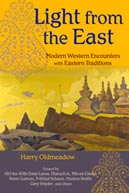 |
John Paraskevopoulos is an executive officer with the Australian Department of Foreign Affairs in Canberra. He studied philosophy at the University of Melbourne before receiving ordination in the Pure Land tradition of Mahayana Buddhism in Kyoto in 1994. He is the author of several articles on Shin Buddhism and a contributor to Sacred Web. His article, "The Absolute in the Mahayana and the Pure Land Way" appears in >Light from the East: Eastern Wisdom for the Modern West .
Click here for more information
|
|
 |
Dr. Shahram Pazouki is currently Associate Professor of Philosophy and Religious Studies and Head of the Department of Religious and Sufi Studies at the Iranian Academy of Philosophy in Tehran, Iran. He received his Doctorate at the University of Tehran. In 1993 he was awarded the Letter of Commendation for outstanding scholarly achievement from the Minister of Sciences and Higher Education. Dr. Shahram Pazouki contributed the essay “The Revival of the Spiritual Dimension of the Sunna in Rūmī’s Mathnawī” to the volume The Philosophy of Ecstasy: Rumi and the Sufi Tradition.
Click here for more information
|
|
 |
Dr. Janine Pease is a renowned American Indian educator and advocate. Amongst other achievements, she was the founding president of the Little Big Horn College in Crow Agency Montana, a past president of the American Indian Higher Education Consortium, a director of the American Indian College Fund, and was appointed by President Clinton to the National Advisory Council on Indian Education. She is currently the Vice President for Academic Affairs at Fort Peck Community College in Poplar, Montana. Janine Pease is a Crow and Hidatsa Indian, enrolled as a Crow.
Dr. Pease's contributions to World Wisdom projects include:
Click here for more information
|
|
 |
Barbara Perry's (1923-2015) introduction to Art from the Sacred to the Profane: East and West , is a reflection of her years of association with the major Perennialist figure Frithjof Schuon, and displays her in-depth knowledge of his influences, his writings, and his own paintings. Mrs. Perry, along with her late husband Whitall Perry, was also acquainted with the great early Traditionalist thinker on arts, Ananda K. Coomaraswamy, with René Guénon, and with almost all of the other central figures from the formative years of this school of thought. Barbara Perry helped interpret Perennialist ideas to many people all over the world for over half a century.
Click here for more information
|
|
 |
According to Harry Oldmeadow , Whitall Perry (1920 – 2005) was "the most authoritative traditionalist of American background." Many researchers, editors, and authors whose works delve into the fields of comparative religion, philosophy, metaphysics, or spirituality have used Whitall Perry's A Treasury Of Traditional Wisdom as an essential reference tool since its publication in 1971. It is a magisterial compendium of spiritual doctrine spanning ail history and every spiritual tradition. Perry also contributed to the book, Ye Shall Know the Truth .
Whitall Perry's early intellectual interests included Platonism and Vedanta, and he traveled extensively in the Middle and Far East both before and after World War II with a brief interlude of study at Harvard University. He was one of several Harvard students who came under Ananda Coomaraswamy's influence in the 1940s.
Click here for more information
|
|
 |
Jean-Claude Petitpierre is a Swiss Traditionalist/Perennialist. He had long associations with Frithjof Schuon, Titus Burckhardt, Martin Lings, and other important authors of Perennialist works. Petitpierre has fulfilled a variety of functions for the United Nations, including Resident Representative of the United Nations Development Programme. He has spent many years living among, and learning from, Hindu and Muslim spiritual figures. Mr. Petitpierre was interviewed for some videoclips on the life and legacy of Martin Lings and a number of topics related to the perennial philosophy.
Click here for more information
|
|
 |
Barbara Petzen is a scholar and educator who has been very involved in bridging the gap that exists between Western and Muslim societies. Ms. Petzen wrote the “Foreword” to The Compassionate Warrior: Abd el-Kader of Algeria, which was written by Elsa Marston.
Barbara Petzen founded Middle East Connections, an organization that works to create a “more complex and accurate understanding of the Middle East and its people through professional development, study tours and outreach consulting,” and is currently its director.
Click here for more information
|
|
 |
Roland Pietsch is a German scholar, writer, translator, and educator who specializes in Islamic philosophy. Dr. Pietsch has taught philosophy, theology and religious studies at universities in Germany, Ukraine, Uzbekistan, and Iran. He is currently Professor of Philosophy and Religious Studies at Ludwig-Maximilians-University of Munich. Dr. Roland Pietch contributed the article "Religious Pluralism and the Transcendent Unity of Religion" to Crossing Religious Frontiers, edited by Harry Oldmeadow.
Click here for more information
|
|
|
 |
Kathleen Raine (1908-2003) was an internationally recognized English poet, critic, and scholar specializing in the poets William Blake and W. B. Yeats. She was the founder of the Temenos Academy, an organization that advocates the primacy of the Imagination and which promulgates a traditional view of the arts and crafts in Britain. In addition to her many seminal works on the Romantic poet William Blake (such as Blake and Antiquity, 1979; Golgonooza, City of the Imagination: Last Studies in William Blake, 1991; Blake and Tradition, 2002), other of her more representative publications include Defending Ancient Springs (1985) and Yeats the Initiate (1986).
Kathleen Raine's contributions to World Wisdom books include:
Click here for more information
|
|
 |
Mudumbaï Ramachandran was a Hindu devotee and philanthropist who had an association of over 40 years with Frithjof Schuon and other leading Perennialists. Ramachandran was a disciple of the Order of Sri Ramakrishna and knew most of the great contemporary spiritual masters of India. He acted for many years as the liaison between Frithjof Schuon and HH the 68th Jagadguru of Kanchi , Sri Chandrasekharendra Saraswati. Mr. Ramachandran also contributed a piece, "Frihjof Schuon: A small Word of Homage and Celebration," to the edition of the Traditionalist journal Sophia which was dedicated to Schuon.
Click here for more information
|
|
 |
Feisal Abdul Rauf is the Imam of Masjid al-Farah in New York City and founder of the American Sufi Muslim Association (ASMA) Society. He is also a co-founder of the Cordoba Initiative, a multi-faith effort to help heal the relationship between the Muslim world and America. He is the author of the best selling book, What’s Right with Islam: A New Vision for Muslims and the West, and often appears in print and broadcast media as an authentic interpreter of Islam. Fiesal Abdul Rauf wrote the foreword to upcoming World Wisdom book The Universal Spirit of Islam .
Click here for more information
|
|
 |
Vincent Rossi is Director of Education for the American Exarchate of the Jerusalem Patriarchate of the Orthodox Church. He also serves as the U.S. Director of the U.K.-centered Religious Education and Environment Programme. Author of two books and nearly a hundred articles on theology, spirituality, and the environment, he was the founder and for twelve years the editor of the journal Epiphany.
World Wisdom has published his article "Presence, Participation, Performance: The Remembrance of God in the Early Hesychast Fathers" presented at the "Paths to the Heart" Conference held at the University of South Carolina on October. This article appeared in Paths to the Heart .
Click here for more information
|
|
 |
Theodore Roszak is a philosopher, social commentator, novelist and teacher who held positions at Stanford, San Francisco State and California State Universities. He is currently Professor of History and Director of the Ecopsychology Institute at California State University, Hayward. Among his many well-known works are The Making of a Counter Culture (1969), Where the Wasteland Ends (1972), The Cult of Information (1994) and Ecopsychology (1995).
Roszak's article "Descartes' Angel" can be found in the World Wisdom book, The Betrayal of Tradition , edited by Harry Oldmeadow.
Click here for more information
|
|
|
 |
Father Lorenzo Sales, born in 1892, was an Italian missionary priest. During the African colonial war (1915-1918), Sales served as a military chaplain to Kenyan indigenous troops. He wrote several books on Canon Alllamano, the founder of the Consolata missionary societies. However, he is best known for having served as the spiritual director of Sister Maria Consolata of the Convent of the Sacred Heart of Moriondo Moncalieri. He died in 1972. His contributions can be found in the World Wisdom anthology, Pray Without Ceasing .
Click here for more information
|
|
 |
Peter Samsel is an independent scholar with wide-ranging interests in traditional metaphysics, symbolism, science, and art. Dr Samsel is the editor of the World Wisdom collection A Treasury of Sufi Wisdom: The Path of Unity. An additional contribution to World Wisdom books is his article, “A Unity with Distinctions: Parallels in the Thought of Gregory Palamas and Ibn al-Arabi,” which appears in the volume Paths to the Heart: Sufism and the Christian East, edited by James Cutsinger. Dr Samsel has authored articles and review essays in Parabola, Sophia: The Journal of Traditional Studies, and Sacred Web: A Journal of Tradition and Modernity. Dr Peter Samsel is also the author of an article on the Sufi metaphysics of Divine unity drawn from the Islamic testimony of faith, titled “The First Pillar of Islam.” It was selected by Parabola for their Parabola in the Classroom collection of scholarly articles for educators.
Click here for more information
|
|
 |
Dorothy Sayers (1893-1957) was an Anglo-Irish novelist, playwright, critic and theological commentator. As well as achieving popularity with novels, detective stories and plays she was widely respected for her translations of Tristan, The Divine Comedy and The Song of Roland. Throughout her life she took a close interest in ecclesiastical and theological developments and was a sharp and perceptive critic of many contemporary follies.
Dorothy Sayers' article "Why Work?", originally given as a lecture in Eastbourne, April 1942 can be found in the anthology, The Betrayal of Tradition .
Click here for more information
|
|
 |
Annemarie Schimmel (1922-2003) was one of the leading experts on Islamic literature and mysticism (Sufism) in the world. She wrote more than 80 books and essays, and lectured at universities and conferences around the world. Professor Schimmel translated and conducted research in the major Islamic languages of Arabic, Persian, Urdu, and Turkish. Her book Mystical Dimensions of Islam (1975) is considered a classic in its field.
Professor Annemarie Schimmel wrote several pieces that have appeared in World Wisdom books:
- The "Foreword" in Understanding Islam, a classic book by Frithjof Schuon
- The "Foreword" in Frithjof Schuon's books of poetry
Click here to go to Prof. Annemarie Schimmel's writing on Frithjof Schuon's poetry.
Click here for more information
|
|
 |
E. F. Schumacher worked as an economic advisor to the British Control Commission charged with rebuilding the German economy after World War II. Later, he held other prestigious positions as an economic planner and consultant. It was E. F. Schumacher who developed many of the principles that have since come to be known as "appropriate technology": earth- and user-friendly technology matched to the scale of community life. Schumacher's famous book Small Is Beautiful: Economics As If People Mattered (1973) reflects these insights and has guided many people to re-examine societal, and personal, choices regarding modern life.
From the E. F. Schumacher book Small is Beautiful World Wisdom has included the "Epilogue" in our collection Science and the Myth of Progress .
Click here for more information
|
|
 |
Timothy Scott is founder and Executive Editor of the journal Eye of the Heart, based in Bendigo, Australia. In addition, Dr. Scott is a regular contributor to the traditionalist journals Sacred Web and Sophia, often writing on various aspects of symbolism and Tradition.
Mr. Scott has contributed the following essays to World Wisdom books:
- "The Logic of Mystery and the Necessity of Faith" in The Betrayal of Tradition
- "Withdrawal, Extinction, and Creation: Christ’s Kenosis in Light of the Judaic Doctrine of Tsimtsum and the Islamic Doctrine of Fana" in The Essential Sophia.
- "'Made in the Image': Schuon’s Theomorphic Anthropology" in Sacred Web 20
Click here for more information
|
|
|
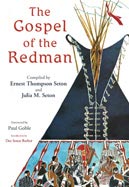 |
Dee Seton Barber was the adopted daughter of Ernest Thompson Seton and Julia M. Seton. She was an expert advisor to Seton scholars, collectors, and Woodcrafters worldwide, and was the custodian of Seton Castle in Santa Fe, New Mexico until it was sold in 2004. Dee Barber-Seton wrote the introduction to The Gospel of the Redman .
Click here for more information
|
|
 |
Hari Prasad Shastri was a gifted writer, translator, and commentator on ancient Hindu texts and scriptures, mostly within the tradition of Advaita Vedanta. He founded the Shanti Sadan Centre in London, which published many of his works and where he gave many public lectures on spiritual topics. Dr. Shastri was not just a scholar but was also an acharya (teacher) in the direct line of one of the oldest teaching schools of classical yoga, the Yoga of Self-Knowledge (Adhyatma Yoga).
The World Wisdom publication Seeing God Everywhere includes the beautiful piece "O Hanami: Flower Viewing" by Hari Prasad Shastri.
Click here for more information
|
|
 |
Philip Sherrard was an English author and scholar educated at Cambridge. Among the works for which he is best known is his collaboration in the complete translation of the Philokalia. The combination of his interests in metaphysics, theology, art and aesthetics led to his participation in the review Temenos, of which he was one of the founders in 1980. He was also recognized as a leading voice in situating modern attitudes and behaviors regarding the environment within a Christian framework. He passed away in 1995.
His essay "Christianity and the Religious Thought of C. G. Jung" is included in the anthology Science and the Myth of Progress . His article "Epilogue" can be found in the anthology, The Betrayal of Tradition .
Click here for more information
|
|
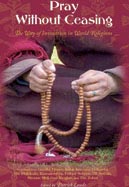 |
Gôjun Shichiri was born in 1836. He lived at Hakata, in southwestern Japan. Shichiri was a very influential and popular propagator of the Tariki way (the way of the “Other”) of Amidism. D.T. Suzuki tells the story of Shichiri’s house being burgled: the thief, upon being arrested, later converted because of the deep impression left upon him by the saintly man. Shichiri was also a scholar and a prolific writer. He died in 1900. His contributions can be found in the World Wisdom anthology, Pray Without Ceasing .
Click here for more information
|
|
 |
Shinran (1173-1262) was the chief disciple of Hônen and the founder of the School of the True Pure Land (Jôdo-Shin-Shû) form of Buddhism in Japan. The Pure Land School encourages its practitioners to rely on the vow of the Buddha Amida to save all beings from suffering. For Shinran, the blessing of nembutsu can and should be experienced here and now and not in a posthumous state of bliss in Amida’s Pure Land. His teachings are the focus of The Essential Shinran (World Wisdom, 2007). His contributions can also be found in the World Wisdom anthology, Pray Without Ceasing .
Click here for more information
|
|
 |
Jeff Shore is Professor of International Zen at Hanazono University, Kyoto, Japan, where he has taught for over a decade and a half. He received his MA in Comparative Philosophy from the University of Hawaii in 1978, focusing on Ch’an (Zen) Buddhism, and thereafter performed postgraduate work in the Department of Religion at Temple University, before he moved to Japan in 1981.
Prof. Shore contributed a foreword to the World Wisdom book, The Laughing Buddha of Tofukuji , by Ishwar C. Harris .
Click here for more information
|
|
|
|
S. Durai Raja Singam (1904-c. 1995) was a prolific Malaysian scholar, editor, and author, and a friend of Ananda K. Coomaraswamy. He was the editor of numerous Indian works on or by Coomaraswamy, including Homage to Ananda K. Coomaraswamy: A Garland of Tributes (1948), Homage to Ananda K. Coomaraswamy: A Memorial Volume (1952), Ananda Coomaraswamy: Remembering and Remembering Again and Again (1974), and Ananda Kentish Coomaraswamy: A Bibliographical Record (1981), as well as The Life and Writings of Sir Mutu Coomaraswamy (1973).
Click here for more information
|
|
 |
Huston Smith is one of the most prominent voices in the contemporary study of religion and spirituality. His book, The World's Religions, is used in countless classes, and Prof. Smith's other books are widely respected in the field. Much of his work over the years deals with the tenets of the Perennial Philosophy. Huston Smith's contributions to World Wisdom's books and DVDs include:
- The "Foreword" in The Essential Sophia, also:
- "What They Have That We Lack: A Tribute to the Native Americans Via Joseph Epes Brown", and
- "The Master-Disciple Relationship"
- The "Foreword" in Journeys East
- The "Foreword" in The Eye of the Heart
- "Hope, Yes; Progress, No" in Every Branch in Me
|
|
|
Click here for more information
|
|
 |
Wolfgang Smith is a scholar and researcher in the fields of mathematics and physics, but is also a writer on theology, metaphysics, and religion. Because of his unusual qualifications in both scientific and theological disciplines, he is able to write with great authority on many topics of concern to religious and scientific scholars today. Besides his scientific work, and numerous articles in scholarly journals, Dr. Smith has authored: Cosmos and Transcendence (1984), Teilhardism and the New Religion (1988), The Quantum Enigma (1995), and The Wisdom of Ancient Cosmology (2003).
Dr. Wolfgang Smith's essays appear in the following World Wisdom books:
Click here for more information
|
|
 |
Gary Snyder is a Pulitzer Prize winning poet, environmentalist and teacher. Snyder was a major figure in the Beat movement and, after spending many years in a Japanese monastery, helped to make Zen more widely known in the West. His many books include Turtle Island, Earth House Hold, A Place in Space, The Real Work, and The Practice of the Wild. His article, "On the Path, Off the Trail," appears in
Light From The East: Modern Western Encounters with Eastern Traditions .
Click here for more information
|
|
|
|
 |
Mark Stone is an artist, art teacher and student of religion and philosophy who lives in Victoria, Australia. His research focuses mainly upon traditional theories of art and comparative mysticism.
Stone contributed the article "Dweller on the Threshold" to the forthcoming World Wisdom title, Crossing Religious Frontiers.
Click here for more information
|
|
 |
Clark Strand is a former Zen Buddhist monk and the author of Seeds From A Birch Tree: Writing Haiku and the Spiritual Journey and The Wooden Bowl: Simple Meditation for Everyday Life. In 1996 he left his position as senior editor of Tricycle: The Buddhist Review to write and teach full time. He now lives in Woodstock, NY, where he leads the Koans of the Bible Study Group. Mr. Strand wrote the foreword to
Honen The Buddhist Saint: Essential Writings And Official Biography .
Click here for more information
|
|
 |
Daisetz Teitaro Suzuki (1870-1966) was a prominent Japanese Buddhist scholar, educated at Tokyo University. After studying in the United States from 1897-1909, he became a lecturer at Tokyo University; he later taught at leading universities in Japan, Europe, and the United States. Suzuki was a leading authority on Buddhism and is known for his introduction of Zen Buddhism to the West. Among his more notable works are Essays in Zen Buddhism and An Introduction to Zen Buddhism. The articles of D. T. Suzuki found in World Wisdom's books are notable in that they include much of his work on Shin Buddhism.
Articles by D. T. Suzuki in World Wisdom books include:
- From The Buddha Eye:
- "Self the Unattainable",
- "What Is the 'I'?",
- "The Buddhist Conception of Reality", and
- "Apropos of Shin"
|
|
|
Click here for more information
|
|
 |
Dr. Roger Sworder (1946-2016) was for many years Head of the Department of Arts at La Trobe University Bendigo where he lectured in Philosophy, Religious Studies and Literature. His particular interests included the pre-Socratic philosophers and Plato, traditional theories of work and art, and Romanticism. He is the author of books on Homer, Parmenides, and Plato, and of the books Mining, Metallurgy and the Meaning of Life (1995), A Contrary History of the West (2011), and The Romantic Attack on Modern Science (2015).
Roger Sworder's article “The Desacralisation of Work” can be found in the anthology from World Wisdom,
The Betrayal of Tradition: The Spiritual Crisis of Modernity , edited by Harry Oldmeadow.
Click here for more information
|
|
 |
A member of the Mescalero Apache tribe, Inés M. Talamantez is a professor at the University of California, Santa Barbara. A graduate of Dartmouth College, Professor Talamantez is the author of Teaching Religion and Healing and has contributed articles to Native Religions and Cultures of North America: Anthropology of the Sacred and Unspoken Worlds: Women's Religious Lives.
Film interviews with Professor Talamantez on American Indian spirituality and advice for American Indian youth are a featured part of the documentary film and DVD on the Crow Shoshone Sun Dance entitled,
Native Spirit: The Sun Dance Way .
Click here for more information
|
|
 |
Dr. Kenneth Kenshin Tanaka is an author, editor, scholar, and translator whose work focuses on Buddhism. He has also been ordained as a Jōdo Shinshū priest. Dr. Tanaka has authored and edited many articles and books, including The Dawn of Chinese Pure Land Buddhist Doctrine, Ocean: An Introduction to Jodo Shinshu Buddhism in America, and Amerika bukkyo (American Buddhism). Dr. Kenneth K. Tanaka has contributed the “Forewords” to a two-volume World Wisdom work edited by Dr. Alfred Bloom: The Shin Buddhist Classical Tradition: A Reader in Pure Land Teaching (vol 1). The forthcoming second volume of this work also features a “Foreword” by Dr. Tanaka.
Click here for more information
|
|
 |
Sir John Tavener (1944–2013) was a world renowned composer, conductor and musical celebrity. Inspired by the writings of Frithjof Schuon, Sir John incorporated Hindu, Sufi, Jewish and North American Indian ideas into his compositions. His article, “Towards the Musica Perennis,” is found in the World Wisdom anthology
Every Man An Artist .
Click here for more information
|
|
 |
Brother Wayne Teasdale (1945-2004) was a lay monk who combined the traditions of Christianity and Hinduism in the way of Christian sannyasa. An activist and teacher in building common ground between religions, Teasdale served on the board of trustees of the Parliament of the World’s Religions. He was a member of the Monastic Interreligious Dialogue and helped draft their Universal Declaration on Nonviolence. Brother Teasdale was also an adjunct professor at DePaul University, Columbia College, and the Catholic Theological Union (where he lived in Chicago) and was coordinator of the Bede Griffiths International Trust. He was co-editor of The Community of Religions, with George Cairns, and the author of two books, A Monk in the World, and The Mystic Heart and dozens of articles on mysticism and religion. He held an M.A. in philosophy from St. Joseph College and a Ph.D. in theology from Fordham University. Br. Wayne Teasdale wrote the foreword for the new edition of A Buddhist Spectrum , by Marco Pallis .
Click here for more information
|
|
|
|
 |
Charles “Chuck” Trimble is an American Indian author, journalist, and advocate, and a national leader in Indian affairs. He has written the Foreword to four World Wisdom books: Spirit of the Indian Warrior (June 2019), an illustrated book of quotations; Black Elk, Lakota Visionary: The Oglala Holy Man and Sioux Tradition (April 2018); an abridged and illustrated edition of Frances Densmore’s Teton Sioux Music, retitled World of the Teton Sioux Indians: Their Music, Life, and Culture (September 2016); and an illustrated edition of Charles Eastman’s Indian Boyhood: The True Story of a Sioux Upbringing (June 2016). Mr. Trimble is the author of the book Iveska (Dog Ear Publishing, 2012), a collection of his own memories of his childhood and life, as well as reflections on matters of interest to those who follow American Indian affairs. Charles Trimble was born and reared on the Pine Ridge Reservation in South Dakota. Charles was inducted into the South Dakota Hall of Fame in 2013 and is an enrolled member of the Oglala Sioux Tribe. He is now retired and lives in Omaha, Nebraska, with his wife, Anne.
Click here for more information
|
|
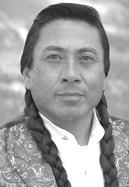 |
James Trosper is a respected voice on traditional Plains Indian spirituality. He is Medicine Man and Sun Dance chief of the Shoshone Tribe in Fort Washakie, Wyoming. Mr. Trosper is a direct descendant of the great Eastern Shoshone chief, Washakie. Mr. Trosper has traveled throughout America, assisting in the continuation of American Indian religious traditions, and explaining the Sun Dance religion of the Plains and Indian spirituality to Indian and white audiences. James Trosper has contributed the following to World Wisdom projects:
Click here for more information
|
|
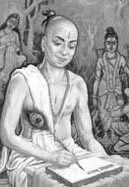 |
Tulsîdās was a medieval Hindi poet and philosopher, born in Rajapur, India in 1532. He is said to have written the Hindi version of the Rāmāyana, the famous epic devoted to Lord Rāma, under the direction of Hanumān. Tulsīdās is regarded as an incarnation of Vālmīki, the author of the classic Sanskrit Rāmāyana. He wrote twelve other books and is often regarded as the most famous Hindi poet. His contributions can be found in the World Wisdom book, Pray without Ceasing .
Click here for more information
|
|
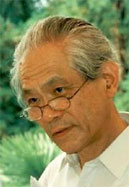 |
Shizuteru Ueda, born in 1926, has been a disciple of Nishitani Keiji for over fifty years and his successor in the Department of Religion at Kyoto University, thereby assuring the continuation of the Kyoto tradition which began with Nishida Kitaro. After receiving doctorates from Kyoto University and the University of Marburg, he contributed numerous studies in the fields of German mysticism and modern German thought, on Zen Buddhism, and on the philosophy of Nishida, to both Japanese and German journals. He was also a regular speaker at the Eranos Conferences in Ascona, Switzerland. His major work on the mysticism of Meister Eckhart, Die Gottesgeburt in der Seele und der Durchbruch zur Gottheit, has been received with particular interest. Dr. Shizuteru Ueda wrote the essay “‘Nothingness’ in Meister Eckhart and Zen Buddhism” that appears in The Buddha Eye: An Anthology of the Kyoto School and Its Contemporaries (World Wisdom, 2004).
Click here for more information
|
|
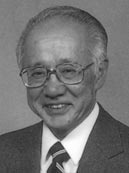 |
Dr. Taitetsu Unno is considered by many to be America's foremost authority on Pure Land Buddhism as developed by
Honen
and
Shinran
in thirteenth-century Japan.
Having retired from Smith College in December 1998, Taitetsu Unno is now the Jill Ker Conway Professor Emeritus of Religion. He taught Buddhism and Japanese aesthetics at that institution since 1971. Dr. Unno is an ordained Shin Buddhist minister, and the founder and Sensei of the Northampton Shin Buddhist Sangha.
Dr. Taitestsu Unno is the author of the introduction to World Wisdom's
Living in Amida’s Universal Vow: Essays on Shin Buddhism, a collection of articles on Shin Buddhism edited by Alfred Bloom. Dr. Unno also contributed the essay “The Practice of Jodo-shinshu” to Living in Amida’s Universal Vow.
Click here for more information
|
|
 |
Rev. Tetsuo Unno studied at U.C. Berkeley, Ryukoku University (Kyoto), Tokyo University, and UCLA. He served as Minister at Buddhist Churches of America's Seattle and Senshin (L.A.) Buddhist Churches. He has taught Religious Studies at California State University, Northridge and Long Beach.
Rev. Unno is the author of the foreword in
Naturalness: A Classic of Shin Buddhim
by
Kenryo Kanamatsu
Click here for more information
|
|
|
|
Charles Upton is a poet, author, and activist who has published numerous books on Sufism, Metaphysics, and other topics. He published his first books of poetry at age 19 and became involved in antiwar and New Age movements before his initiation into a traditional Sufi order in the late 1980's. He has written several notable books, including The System of the Antichrist: Truth and Falsehood in Postmodernism and the New Age and Shadow of the Rose: The Esoterism of the Romantic Tradition. Upton contributed the article "The Transcendent Unity of Religions and Spiritual Practice" to the forthcoming World Wisdom book, Crossing Religious Frontiers.
Click here for more information
|
|
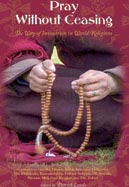 |
Mir Valiuddin was a professor of philosophy at the Osmania University in Hyderabad, India, for many years, specializing in Sufism. His work has contributed to demonstrating the extent to which this heritage has shaped Muslim thought and civilization through the centuries. One of the foremost academic scholars of Sufism in the East, he is the author of
Quranic Sufism, Contemplative Disciplines in Sufism,
and
Love of God: A Sufic Approach.
His contributions can be found in the World Wisdom anthology,
Pray Without Ceasing .
Click here for more information
|
|
 |
Arthur Versluis is a professor of American Thought and Language at Michigan State University, where he teaches writing and literature. He is the author of numerous books and articles on traditional religion and cosmology, esoterism and mysticism, and nature and the sacred. His writings are noted for their focus on a revivification of effective Christian esoterism and also on spirituality in America, inlcuding the American Indian spiritual traditions.
Professor Versluis has contributed an essay,
"Hierophanic Nature,"
to the World Wisdom collection of essays
Seeing God Everywhere: Essays on Nature and the Sacred .
Click here for more information
|
|
 |
Beatriz Vidal is an internationally known artist and prize-winning illustrator of children’s books. Her most recent book for Wisdom Tales Press (World Wisdom’s children’s books imprint) is Little Lek Longtail Learns to Sleep, which was written by Bette Killion. Little Lek Longtail was an award-winning Finalist in the 2016 USA “Best Book” Awards. For her first book for Wisdom Tales, Ms. Vidal collaborated with author Alexis York Lumbard on Pine and the Winter Sparrow, a retelling of an American Indian tale.
Among Ms. Vidal’s best-known previous books are the best-selling Bringing the Rain to Kapiti Plain, A Library for Juana (winner of the prestigious Tomás Rivera Mexican American Children’s Book Award), Federico and the Magi’s Gift (which she both wrote and illustrated), and A Gift of Gracias. Beatriz Vidal’s work has appeared on several PBS programs and she has given design and illustration workshops in Argentina, Cyprus, China and Mongolia. There have been many exhibitions of her paintings in the United States and abroad.
Click here for more information
|
|
|
 |
The Most Reverend Metropolitan Kallistos Ware (1934 – 2022) of Diokleia was an auxiliary bishop of the Ecumenical Patriarchate in Great Britain. He was a leading author and translator of Orthodox texts. He studied Classics and Theology at Magdalene University, Oxford, and was ordained to the priesthood in 1966. He held a lecturer position at Oxford in Eastern Orthodox Studies for 35 years. His best known works include The Orthodox Church and The Orthodox Way, and his translation of the Philokalia with G. E. Palmer and Philip Sherrard.
Metropolitan Kallistos has contributed the following to World Wisdom's books:
Click here for more information
|
|
|
 |
Lauren Waukau-Villagomez is an educator and author of works on the oral traditions and storytelling of the North American tribes. She was born and raised on the Menominee Indian Reservation in Wisconsin, and is a member of the Bear Clan. She is co-author of the book Teaching Native America Across the Curriculum, and has researched and written on various subjects within the domain of education, particularly having to do with multi-cultural and Native American literature, tradition, and oral learning. Dr. She currently teaches at the Teacher Education Department at the College of Menominee Nation. Dr. Waukau-Villagomez currently works in the Teacher Education Department at the College of Menominee Nation. Dr. Lauren Waukau-Villagomez contributed the “Foreword” to The Man Who Dreamed of Elk-Dogs: & Other Stories from the Tipi (2012) by Paul Goble.
Click here for more information
|
|
 |
Simon Weightman was former head of the Department for the Study of Religion and Senior Lecturer in Hindi in the South Asia Department of the School of Oriental and African Studies, University of London, retiring in 2002. In 1959 he matriculated at the University of Oxford, studying Arabic, Latin and Greek. He graduated in 1961 in Persian, along with Turkish. From 1961-63 Weightman served as Wolfson Research Fellow at the British Institute of Persian Studies, based in Teheran, Iran. In 1963 he joined the staff of the School of Oriental and African Studies in London, where he also acquired Hindi and Sanskrit. Simon Weightman contributed the essay “Spiritual Progression in Books One and Two of the Mathnawī” to the volume The Philosophy of Ecstasy: Rumi and the Sufi Tradition.
Click here for more information
|
|
 |
Simone Weil was born in Paris in 1909 to secular Jews parents. In 1936, she went to Spain to provide humanitarian support to the Republican troops in the Spanish Civil War. She had her first spiritual experience at the Solesmes Monastery when hearing Gregorian chant – in her own words – “Christ himself came down and He took me.” Since her death, in 1943, she has come to be known as a major spiritual thinker of the twentieth century. Her contributions can be found in the World Wisdom anthology,
Pray Without Ceasing .
Click here for more information
|
|
 |
Deborah Weiss-Dutilh was born in Los Angeles, California. She holds a Bachelor of Arts degree in French from the University of California, and a teaching credential in English. Her studies led her to the Sorbonne and to Pau, France, near the Pyrénées, where she lives with her husband and two sons. Studies in psychotherapy, with a keen interest in the link between psychology, spirituality, and philosophy sparked her friendship with Jean Biès and their subsequent collaboration. She has translated
Returning to the Essential: The Selected Writings of Jean Bies .
Click here for more information
|
|
 |
Albert White Hat, Sr. (1938-2013), a member of the Rosebud Sioux Tribe of South Dakota, was a Sicangu (Rosebud) Lakota educator, author, linguist, tribal leader, and respected elder. Nationally respected for his work on Lakota (Sioux) language and oral tradition, Mr. White Hat wrote the important book Writing and Reading the Lakota Language (1999, University of Utah Press). He also provided Lakota translations for many Hollywood movies, including Dances with Wolves, and appeared on the Ken Burns documentary series The West. Albert White Hat, Sr. was much in demand over several continents as a speaker. He died in South Dakota on June 11, 2013 at the age of 74.
Click here for more information
|
|
 |
Alan Williams is Professor of Iranian Studies and Comparative Religion at the University of Manchester. He is the author of several books on Zoroastrian and Islamic literature in Iranian languages and is one of the few scholars of ancient Iranian languages who also works on Classical Persian texts of the medieval period. He also translates modern Persian poetry. Prof. Williams contributed the essay “Open Heart Surgery: The Poetic Operation of Love in Rūmī’s Mathnawī” to the volume The Philosophy of Ecstasy: Rumi and the Sufi Tradition.
Click here for more information
|
|
 |
Dr. Raymond Wilson is a Professor of History at Fort Hays State University, Kansas, where he lives with his wife. He is the author of Ohiyesa: Charles Eastman, Santee Sioux, and the editor of Natives Americans in the Twentieth Century and Indian Lives: Essays on Nineteenth- and Twentieth-Century Native American Leaders.
Dr. Wilson wrote the foreword to The Essential Charles Eastman (Ohiyesa).
Click here for more information
|
|
|
 |
Gao Xingjian was the first Chinese recipient of the Nobel Prize for Literature in 2000. Born in 1940 in Jiangxi province in eastern China, he earned a university degree in French at Beijing, and decided to become a writer. Choosing exile in 1987, he settled in Paris, where he completed
The Soul Mountain
two years later. He is a playwright and painter as well as a fiction writer and critic. At the time of his first successes as a playwright, Gao was falsely diagnosed with lung cancer. The narrator of
The Soul Mountain
shares these circumstances with the author as he leaves Beijing to explore various rural regions of China. Ostensibly undertaken to collect folk songs and legends, the trip is a means of reconnecting with traditional China, particularly Taoism and shamanism, beyond the Cultural Revolution. His article,
“Namo Amitofu,”
can be found in the World Wisdom anthology,
Pray Without Ceasing .
Click here for more information
|
|
|
|
Ueda Yoshifumi (1904-1993) was Professor at Chikushi Gakuen, Fukuoka, Japan, and Professor Emeritus at Nagoya University, Nagoya. He edited the Shin Buddhism Translation series at Hongwanji International Center, Kyoto. Prof. Ueda Yoshifumi contributed the essay “Freedom and Necessity in Shinran’s Concept of Karma” to Living in Amida’s Universal Vow, edited by Alfred Bloom.
Click here for more information
|
|
 |
Philip Zaleski is an author and editor of works on spirituality, with a particular focus on prayer and the practice of spiritual life. He is the author of The Recollected Heart and Gifts of the Spirit: Living the Wisdom of the Great Religious Traditions, and coauthor (with his wife Carol) of Prayer: A History. Mr. Zaleski is the editor of The Best Spiritual Writing series, and is a senior editor at Parabola magazine. He teaches religion at Smith College and has been a visiting lecturer in literature at Wesleyan University. His writing on religion and culture regularly appears in national publications including The New York Times, Parabola, First Things and Reader’s Digest.
Mr. Zaleski's insightful remarks can be found in the forewords to the following World Wisdom books:
Click here for more information
|
|
 |
Alireza K. Ziarani was born in Tehran, Iran, in 1972. He studied mathematics at McGill University, Canada, and later engineering at the University of Toronto, Canada, where he received a Ph.D. degree in electrical and computer engineering in 2002. A tenured faculty member at Clarkson University in Potsdam, New York, he taught courses in engineering and science before leaving for the private sector in 2009. He currently resides with his wife in Bloomington, Indiana.
Click here for more information
|
|
|